
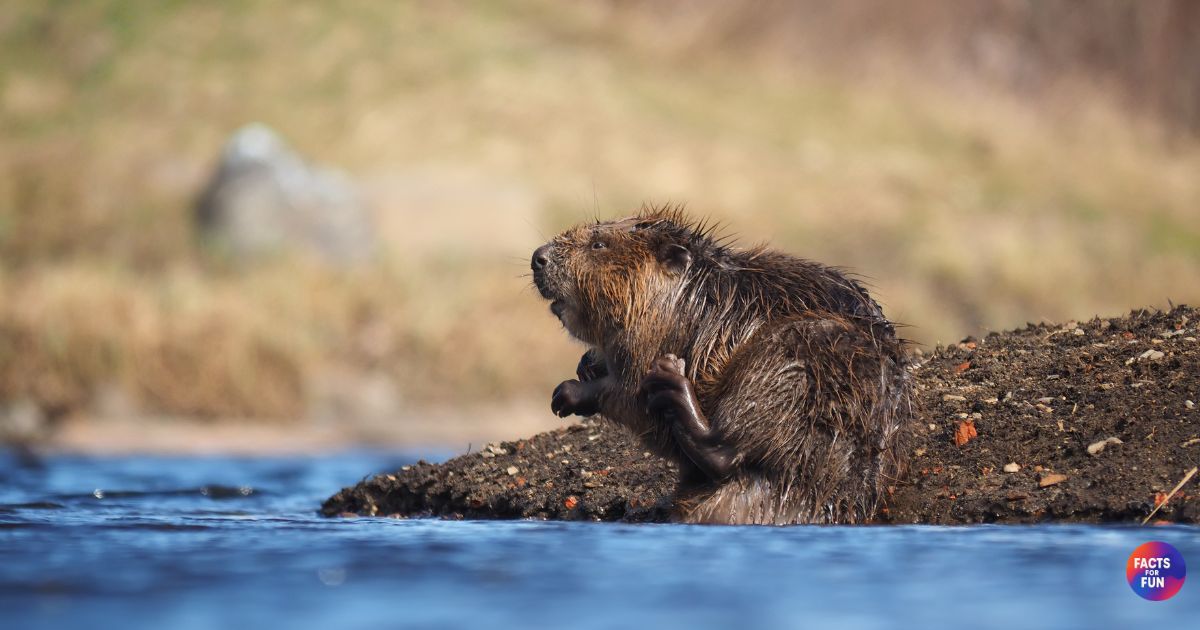
Beavers are nature’s engineers — remarkable rodents that build dams, create wetlands, and literally change the shape of rivers. Behind those orange teeth and flat tails lies a creature with complex family life, intelligence, and an important ecological role. Here are 25 fascinating facts about beavers you might not know.
Table of Contents:
- There Are Only Two Living Beaver Species
- Beavers Are the Second-Largest Rodents on Earth
- Their Teeth Contain Iron
- That’s Why Their Teeth Are Orange
- Their Teeth Never Stop Growing
- Beavers Are Strictly Vegetarian
- Ecosystem Engineers of the Animal World
- Beaver Wetlands Help Fight Climate Change
- Beavers Boost Biodiversity Everywhere They Live
- Beavers Live Across the Northern Hemisphere
- Beavers Are Strong Swimmers
- They Can Hold Their Breath for 15 Minutes
- Built-In Goggles for Underwater Vision
- Their Lips Close Behind Their Teeth
- Dams Provide Safety and Food Access
- They Dig Canals to Transport Wood
- The World’s Longest Beaver Dams Are Visible from Space
- The Sound of Running Water Makes Them Build
- They Can Fell Big Trees Fast
- Their Tails Serve Many Purposes
- Castoreum Smells Like Vanilla
- Two Types of Beaver Homes
- North American and Eurasian Beavers Can’t Interbreed
- Monogamous and Family-Oriented
- Once Hunted to Near Extinction
- FAQ
There Are Only Two Living Beaver Species
All living beavers belong to one of two species: the North American beaver (Castor canadensis) and the Eurasian beaver (Castor fiber). Although dozens of related species once existed during the Ice Age, only these two survived. They look almost identical, but their genetics differ — North American beavers have 40 chromosomes, while Eurasian ones have 48, so they can’t interbreed.
Beavers Are the Second-Largest Rodents on Earth
Weighing between 35 and 65 pounds (16–30 kg), and sometimes up to 110 pounds (50 kg), beavers are giants among rodents — second only to the South American capybara. Despite their bulk, they move gracefully in the water, powered by strong webbed feet and a muscular tail.
Their Teeth Contain Iron
Beaver incisors are reinforced with iron, which makes the enamel exceptionally strong and resistant to chipping. This built-in metal armor allows them to chew through hardwood trees like birch, oak, or aspen.
That’s Why Their Teeth Are Orange
The same iron that strengthens their enamel also gives their teeth a unique orange or rust-brown color. It’s not a sign of decay — it’s a sign of durability.
Their Teeth Never Stop Growing
A beaver’s incisors grow throughout its life, sometimes up to 2–3 millimeters per week. To prevent overgrowth, they must constantly gnaw on wood, which keeps the teeth sharp and evenly worn.
Beavers Are Strictly Vegetarian
Despite living in water, beavers never eat fish. They’re pure herbivores that feed on aquatic plants, roots, bark, and twigs. In winter, they store branches underwater near their lodges, where the bark remains fresh under the ice.
Ecosystem Engineers of the Animal World
Beavers reshape their environment more than any other species except humans. By damming rivers, they create wetlands that control floods, filter water, and support countless other species — earning them the title “ecosystem engineers.”
Beaver Wetlands Help Fight Climate Change
When beavers flood an area, the resulting wetlands trap sediment and organic matter, keeping carbon locked in the soil instead of releasing it as CO₂. Their ponds also reduce wildfires and keep landscapes moist during droughts.
Beavers Boost Biodiversity Everywhere They Live
A single beaver dam can create a thriving ecosystem. Frogs, turtles, ducks, fish, and insects all find shelter in these ponds. Birds nest nearby, and new vegetation flourishes on the banks — a ripple effect of life triggered by one animal.
Beavers Live Across the Northern Hemisphere
You can find beavers throughout North America, from Alaska to northern Mexico, and across Europe and Asia. They prefer freshwater streams, rivers, and lakes surrounded by trees, where food and building materials are plentiful.
Beavers Are Strong Swimmers
A beaver can swim at speeds of up to 5 miles per hour (8 km/h), using its tail as a rudder and its webbed feet as paddles. They can stay underwater for long stretches without surfacing.
They Can Hold Their Breath for 15 Minutes
By slowing their heart rate and redirecting blood to vital organs, beavers can stay submerged for up to 15 minutes. This lets them build and repair dams or escape predators without ever coming up for air.
Built-In Goggles for Underwater Vision
Beavers have transparent third eyelids called nictitating membranes that act like natural goggles. These protect their eyes while allowing them to see perfectly underwater — evolution’s own diving mask.
Their Lips Close Behind Their Teeth
To chew underwater without swallowing water, beavers can seal their lips behind their front teeth. This clever adaptation lets them carry branches and continue gnawing below the surface.
Dams Provide Safety and Food Access
By creating deep ponds, beaver dams protect their lodges from predators such as wolves or bears. They also keep food stores submerged in cold water during winter — like a natural refrigerator.
They Dig Canals to Transport Wood
Beavers don’t just build dams and lodges — they also construct canals to float heavy logs. These water “roads” make it easier to move materials and avoid land predators.
The World’s Longest Beaver Dams Are Visible from Space
Beaver dams range from small structures to enormous walls stretching over 300 meters (nearly 1,000 feet). One of the largest, located in Wood Buffalo National Park, Canada, is so big it can be seen from satellites.
The Sound of Running Water Makes Them Build
Beavers are triggered by the sound of trickling water. Experiments show that even recordings of dripping water make them start building — their instincts tell them to “fix the leak.”
They Can Fell Big Trees Fast
With their powerful jaws and teeth, beavers can bring down a six-inch tree in under an hour. Larger ones may take a few hours, but the precision of their gnawing rivals a human with an axe.
Their Tails Serve Many Purposes
A beaver’s flat, scaly tail acts as a rudder when swimming, a tripod when standing upright, a fat reserve for winter, and even a warning system — they slap it loudly on water to alert others of danger.
Castoreum Smells Like Vanilla
Beavers secrete a substance called castoreum from glands near their tails. It smells sweet, like vanilla, and was once used in perfumes and even food flavorings approved by the FDA.
Two Types of Beaver Homes
Beavers build bank lodges — burrows along riverbanks — or island lodges, dome-shaped huts made from sticks and mud in open water. Both have underwater entrances that protect against predators and freezing temperatures.
North American and Eurasian Beavers Can’t Interbreed
Though similar in behavior, the two species are genetically incompatible. Their chromosome difference prevents them from producing offspring — a natural barrier between continents.
Monogamous and Family-Oriented
Beavers mate for life, and both parents care for their young, called kits. Families share responsibilities: adults repair the dam, while yearlings babysit younger siblings.
Once Hunted to Near Extinction
In the 18th and 19th centuries, beavers were almost wiped out for their fur and castoreum. Their pelts were used to make luxury felt hats across Europe, fueling the fur trade. Thanks to conservation efforts, they’ve made a strong comeback in many regions.
FAQ
Do beavers eat fish?
No, beavers are strict herbivores. They prefer bark, twigs, roots, and aquatic plants — their flat molars are designed for grinding vegetation, not meat.
Why do beavers build dams?
Beavers build dams to create deep ponds that keep them safe from predators and provide access to food in winter. It’s both a shelter and a survival system.
How do beavers help the environment?
Their dams prevent soil erosion, reduce flooding, filter pollutants, and create habitats for countless species. Beaver wetlands are biodiversity hotspots and natural climate stabilizers.
Where do beavers live?
Beavers live near freshwater lakes, rivers, and streams across North America, Europe, and northern Asia. They prefer wooded areas with easy access to soft trees like willow or poplar.
What’s the largest beaver dam ever discovered?
One in Wood Buffalo National Park, Canada, stretches more than 2,600 feet (800 meters). It’s so huge that it’s visible from space — an engineering marvel built entirely by animals.
Sources
- Wikipedia – Beaver
- Smithsonian’s National Zoo – Beaver Facts
- National Geographic Kids – Beaver
- WWF – Top 10 Facts About Beavers
- Occidental Arts & Ecology Center – Beaver Ecology
- The Wildlife Trusts – Beaver
See also our short video about beavers