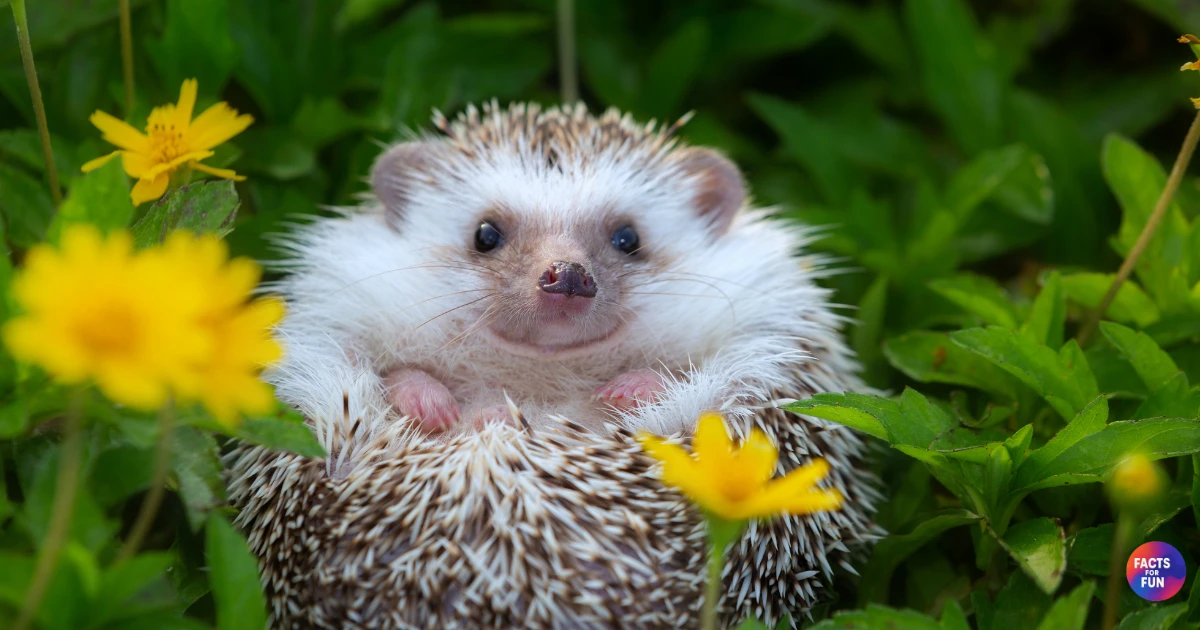
Hedgehogs are small insect-eating mammals covered with sharp spines, belonging to the family Erinaceidae. They have existed for over 15 million years and are found across Europe, Asia, and Africa. In total, scientists recognize 17 living species grouped into five main genera — Erinaceus, Atelerix, Hemiechinus, Mesechinus, and Paraechinus. Despite their cute appearance, hedgehogs are solitary, nocturnal animals with impressive survival skills. They curl into a tight spiny ball when threatened, use their keen sense of smell to find insects at night, and in colder regions, they hibernate through the winter months.
- European Hedgehog (Erinaceus europaeus)
- Amur Hedgehog (Erinaceus amurensis)
- Southern White-Breasted Hedgehog (Erinaceus concolor)
- Northern White-Breasted Hedgehog (Erinaceus roumanicus)
- African Pygmy Hedgehog (Atelerix albiventris)
- North African Hedgehog (Atelerix algirus)
- Southern African Hedgehog (Atelerix frontalis)
- Somali Hedgehog (Atelerix sclateri)
- Long-Eared Hedgehog (Hemiechinus auritus)
- Indian Long-Eared Hedgehog (Hemiechinus collaris)
- Daurian Hedgehog (Mesechinus dauuricus)
- Hugh’s Hedgehog (Mesechinus hughi)
- Gaoligong Forest Hedgehog (Mesechinus wangi)
- Eastern Forest Hedgehog (Mesechinus orientalis)
- Ethiopian Hedgehog (Paraechinus aethiopicus)
- Brandt’s Hedgehog (Paraechinus hypomelas)
- Indian Hedgehog (Paraechinus micropus)
- Bare-Bellied Hedgehog (Paraechinus nudiventris)
- Fun Fact: The Secret Power of Hedgehog Spines
To discover more fun facts about hedgehogs — their habits, diet, and instincts — check out our main article: 👉 Fun Facts About Hedgehogs: Nature’s Tiny Spiky Marvels
European Hedgehog (Erinaceus europaeus)
The European hedgehog is the best-known and most widespread species. It inhabits woodlands, farmlands, gardens, and city parks throughout Europe, including the British Isles. Adults typically weigh between 800 and 1,200 grams and have around 5,000 to 7,000 spines. Their brown-and-white fur gives them a distinctive look. A fascinating trait of this species is self-anointing—when a hedgehog encounters a new scent, it licks or chews the substance, creating foam which it spreads on its spines. Scientists still debate why this behavior exists, but it may serve as camouflage or chemical protection. The European hedgehog hibernates from late autumn until spring and can lower its body temperature to near freezing. Sadly, due to habitat loss and traffic accidents, it is now listed as “near threatened” in many parts of Europe.
Amur Hedgehog (Erinaceus amurensis)
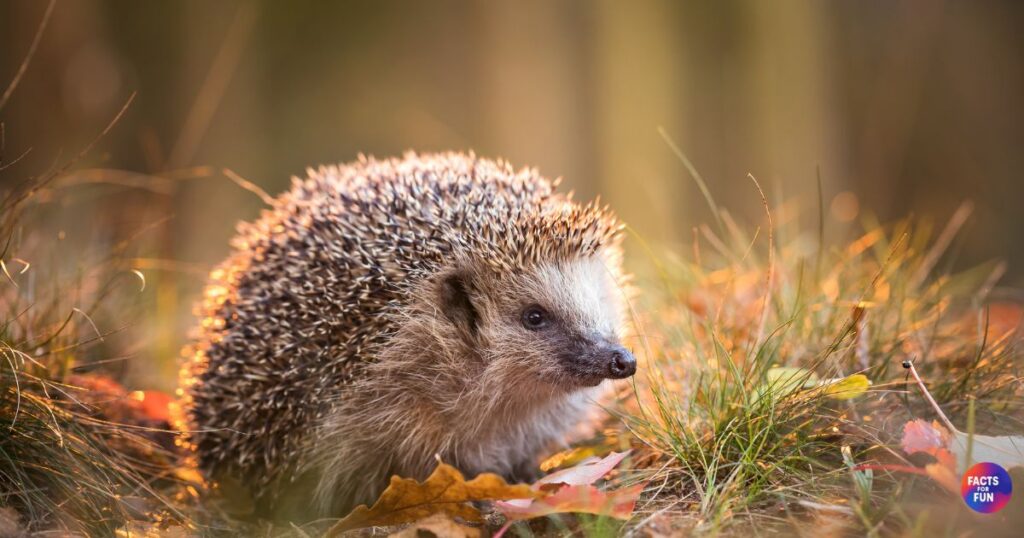
This species lives in the forests and grasslands of the Russian Far East, China, and Korea. It looks similar to the European hedgehog but has paler spines with darker tips and a more rounded body shape. The Amur hedgehog prefers temperate climates with rich vegetation where it can hide during the day in burrows or under leaves. It hibernates for several months when temperatures drop. In folklore across Asia, this hedgehog symbolizes good luck and protection, thanks to its resilience and quiet nature.

Southern White-Breasted Hedgehog (Erinaceus concolor)
Found across Central and Southeastern Europe, this species is slightly smaller than its northern relatives and easily recognized by its pale or white chest and belly. It adapts well to various habitats—from forests to dry plains and suburban gardens. Unlike the European hedgehog, it rarely rolls into a full ball when frightened, often choosing to flee instead. It is active mostly at night, feeding on beetles, worms, and even small frogs.
Northern White-Breasted Hedgehog (Erinaceus roumanicus)
This species inhabits Central and Eastern Europe, from Poland to the Balkans. It is a close relative of E. concolor but has a darker face and a shorter snout. These hedgehogs often coexist near human settlements, taking advantage of gardens rich in insects. They are skilled diggers, using their strong claws to make shallow burrows or find food underground. Although common, they sometimes carry parasites like ticks, which can be transmitted to pets or people.
African Pygmy Hedgehog (Atelerix albiventris)
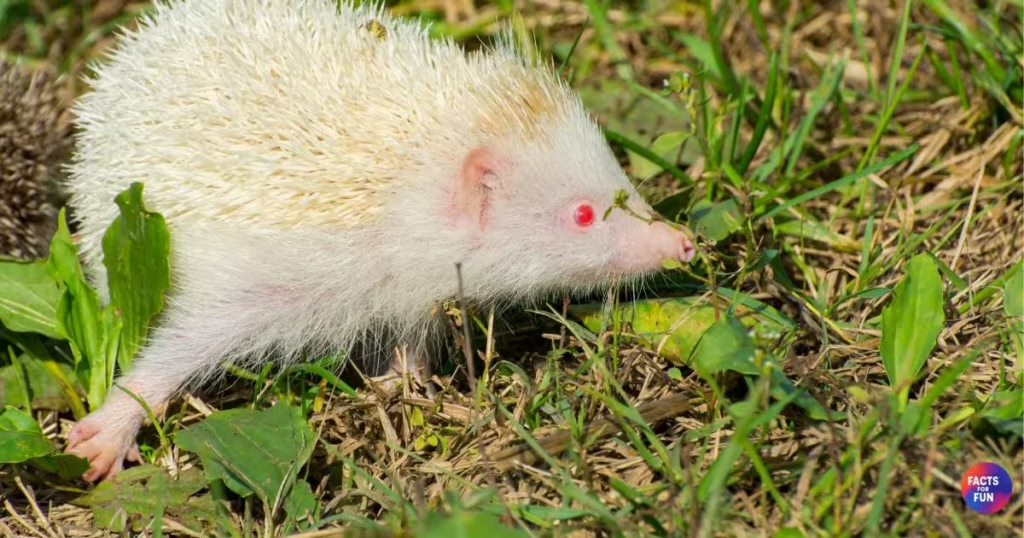
One of the most popular pets in the world, the African pygmy hedgehog is native to central and eastern Africa. It thrives in savannas and dry grasslands from Senegal to Tanzania. It is much smaller than the European type, weighing only 300–600 grams. Its back is covered with creamy-brown spines, while the face and belly are white. This species has only four toes on each hind foot—hence its other name, the “four-toed hedgehog.” It is curious, playful, and adaptable to warm climates. In captivity, breeders have developed dozens of color variations. However, owners must watch for Wobbly Hedgehog Syndrome (WHS), a degenerative neurological disease that affects balance and coordination.
North African Hedgehog (Atelerix algirus)
This hedgehog inhabits North Africa and some coastal areas of southern Spain. It has longer legs and a more pointed snout than other species, allowing it to move quickly. Its fur is lighter, often sandy-colored, and it lacks spines on the crown of its head. The North African hedgehog is an expert runner and can travel several kilometers in one night while searching for insects. It has been domesticated in some regions and crossbred with four-toed hedgehogs to create small hybrid pets.
Southern African Hedgehog (Atelerix frontalis)
Living in Botswana, Zimbabwe, and South Africa, this hedgehog can be recognized by a distinct white stripe running across its forehead. It has hollow spines that help with temperature regulation in hot environments. Its diet includes insects, fruits, and occasionally small reptiles, making it one of the most omnivorous species. Due to deforestation and agricultural expansion, it often seeks shelter near human homes and is considered an important insect controller.
Somali Hedgehog (Atelerix sclateri)
The Somali hedgehog is one of the least-studied species. It lives in dry savannas and scrublands of Somalia. With sharp spines and strong legs for digging, it spends most of the day in burrows to escape the heat. Its activity begins after sunset, when it hunts beetles and termites. Because of its secretive lifestyle and harsh habitat, it remains one of the most mysterious hedgehogs on Earth.
Long-Eared Hedgehog (Hemiechinus auritus)
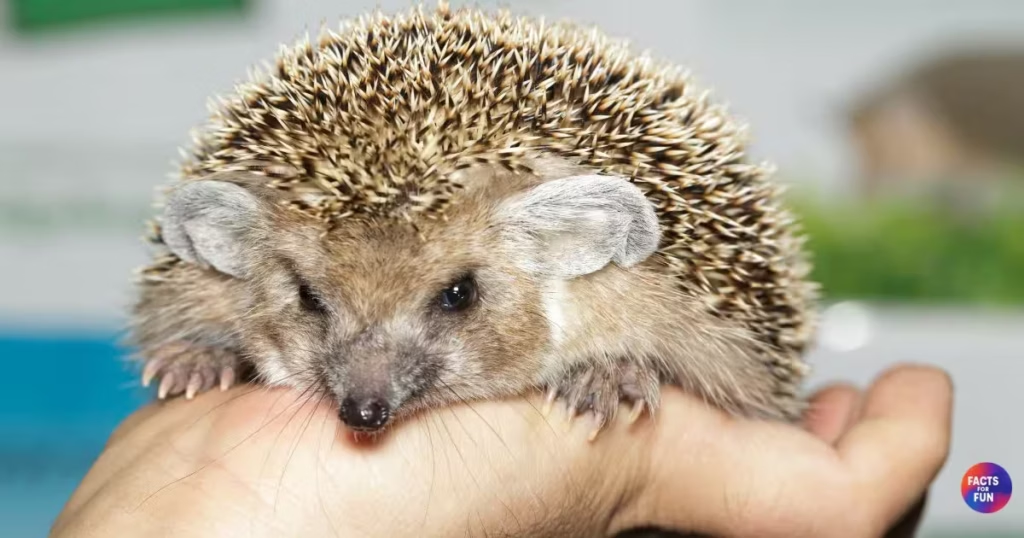
This species has perhaps the most striking appearance—its ears can grow up to 4 cm long, sticking well above the spines. Found from North Africa to Central Asia, it thrives in deserts and steppes. The large ears help the hedgehog radiate heat and detect the smallest rustle of prey in the sand. It weighs about 400 grams and has remarkable resistance to snake venom, allowing it to eat small reptiles and even scorpions. The long-eared hedgehog is sometimes kept as a pet but can be territorial and prone to biting if startled.
Indian Long-Eared Hedgehog (Hemiechinus collaris)
Native to India and Pakistan, this species resembles H. auritus but has darker spines and shorter legs. It is well adapted to dry plains and agricultural fields, digging burrows up to 50 cm deep to escape the heat. It is active only at night, feeding on insects and small invertebrates. During the monsoon season, it can be seen searching for worms in the soft soil after rain.
Daurian Hedgehog (Mesechinus dauuricus)
The Daurian hedgehog lives in the cold steppe and forest-steppe regions of Mongolia, China, and eastern Russia. It grows up to 30 cm in length and weighs up to 1.4 kg. Unlike most hedgehogs, its spines are slightly grooved and less sharp, giving it a smoother texture. It prefers open grasslands where it digs simple burrows for resting and hibernation. It is an important part of local ecosystems, feeding on agricultural pests, but its numbers are declining in some regions due to habitat loss.
Hugh’s Hedgehog (Mesechinus hughi)
Endemic to central China, this hedgehog occupies forests and bushy areas. It is medium-sized with a dense coat of brown and cream-colored spines. In some rural regions, it has been hunted for traditional medicine, which has led to population decline. It is currently listed as vulnerable in local conservation lists. Hugh’s hedgehog is solitary and shy, rarely seen by humans except during warm, wet nights when food is abundant.
Gaoligong Forest Hedgehog (Mesechinus wangi)
Discovered in 2018 in Yunnan Province, China, this rare species lives only in the evergreen forests of the Gaoligong Mountains. It differs from other hedgehogs by its unique striped spines, wide nose, and special arrangement of teeth. It hibernates for almost six months, from October to April, and is known only from a single protected reserve. Its discovery proves that new hedgehog species can still be found even today.
Eastern Forest Hedgehog (Mesechinus orientalis)
A recently described species from eastern China, the Eastern Forest Hedgehog is smaller and has very short but sharp spines. Its black-and-white striped spines create a beautiful contrast, and its habitat is limited to forested mountain areas. Because it was only confirmed by genetic research in 2023, little is known about its behavior, but scientists believe it hibernates like other northern hedgehogs.
Ethiopian Hedgehog (Paraechinus aethiopicus)
Also called the desert hedgehog, this small creature is perfectly adapted to arid regions of North Africa and the Arabian Peninsula. It has a dark “mask” on its face, long ears, and a light belly. Its spines are banded in shades of brown and cream, providing camouflage in sand. It conserves water through specialized kidneys and can survive weeks without drinking. During hot days, it hides in burrows and becomes active only at dusk.
Brandt’s Hedgehog (Paraechinus hypomelas)
This large, long-spined hedgehog inhabits Iran, Afghanistan, and Central Asia. Its spines can exceed 4 cm in length, giving it an intimidating look. Instead of curling into a ball, it often faces predators aggressively, hissing and thrusting its spines forward. It’s an excellent runner and climber, feeding on insects, small reptiles, and sometimes bird eggs. Its ability to adapt to harsh, dry conditions makes it one of the toughest species in the genus.

Indian Hedgehog (Paraechinus micropus)
Found in the deserts and semi-arid zones of India and Pakistan, this hedgehog has a dark, mask-like face and a small white patch on its forehead. Its metabolism slows during food shortages, helping it survive long dry periods. It prefers sandy terrain where it can dig quickly and escape into burrows during the hottest parts of the day.
Bare-Bellied Hedgehog (Paraechinus nudiventris)
Endemic to southern India, this species is notable for its lighter face and partially bare belly. Unlike northern hedgehogs that hibernate in winter, the bare-bellied hedgehog aestivates—becomes dormant during the hottest months to conserve energy. It’s active mostly during cooler evenings, searching for insects and snails. Because of habitat destruction, its population has been declining, and it is now considered endangered in parts of its range.
Fun Fact: The Secret Power of Hedgehog Spines
Each hedgehog spine is a hollow keratin tube that absorbs impact like a tiny spring. When a hedgehog falls, the spines compress to protect its body, allowing it to survive falls from surprising heights. Scientists study hedgehog spines to design better helmets and shock-absorbing materials for humans.
Sources
- WWF – Top 10 Facts About Hedgehogs
- Wikipedia – Hedgehog
- New World Encyclopedia – Hedgehog
- McGill University – Spines: Multifunctional Mechanisms
- Iowa State University – African Hedgehog Medical Guide