
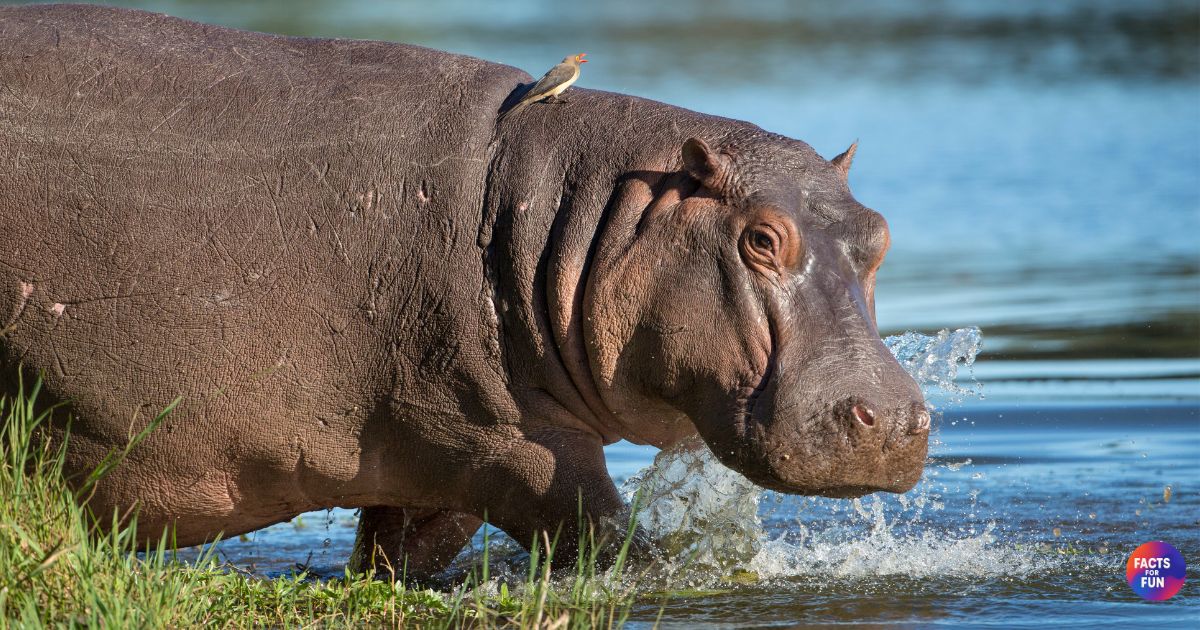
Hippos (Hippopotamus amphibius) look like gentle river giants, but beneath the surface they’re precision-engineered herbivores with armor-thick skin, submarine habits, and one of the most formidable tempers in Africa. Here’s a deep, readable tour of what makes hippos so unusual.
- Two Living Hippo Species
- The Third-Largest Land Mammal
- A Name That Means “River Horse”
- Whales Are Their Closest Living Relatives
- A Sub-Saharan Specialist
- Vanished From Ancient Egypt
- The Pygmy Hippo’s Hidden Realm
- Weight, Height, and Record Giants
- Dense Bodies That Don’t Float
- Surprisingly Fast on Land
- Daytime River Life, Nighttime Grazers
- Natural “Sunscreen” That Isn’t Blood
- Eyes, Ears, Nostrils on Top
- Amphibious Breathing Tricks
- Social Pods With One Boss
- Territorial Displays You Can’t Miss
- Tusks That Never Stop Growing
- Notoriously Dangerous—Here’s Why
- Engineers of Wetlands
- Communication Above and Below Water
- Skin That Needs Water, Not Sun
- Calves Born Into Water Worlds
- Grazers With Simple Tastes
- Teeth for a Lifetime of Grinding
- Heat, Drought, and River Politics
- Conservation Status: Vulnerable
- Ivory by Another Name
- Ancient Neighbors, Modern Conflicts
- A Mind for Maps
- FAQ
Two Living Hippo Species
Modern hippos come in two species: the common (river) hippo and the pygmy hippo of West Africa. The river hippo is the iconic heavyweight of big African rivers and lakes, while the shy, forest-dwelling pygmy hippo is smaller, more solitary, and mostly nocturnal—so discreet that it was scientifically described only in the 19th century.
The Third-Largest Land Mammal
By mass, river hippos trail only elephants and white rhinos among land mammals. Adult bodies are compact and barrel-shaped, built less like runners and more like living bulldozers for pushing through water, reeds, and mud.
A Name That Means “River Horse”
“Hippopotamus” comes from ancient Greek for “river horse.” The nickname fits their semi-aquatic lifestyle: they graze like livestock at night, then return to rivers by day to rest, cool, and socialize.
Whales Are Their Closest Living Relatives
Despite the pig-like look, genetic and fossil evidence place hippos closest to whales and dolphins. Their line split tens of millions of years ago, but both branches evolved aquatic adaptations—proof that evolution often rhymes.
A Sub-Saharan Specialist
River hippos are native to sub-Saharan Africa, favoring slow rivers, oxbow lakes, and wetlands. They need year-round water deep enough to submerge and nearby grazing grounds with abundant grass.
Vanished From Ancient Egypt
Hippos once thrived along the Nile. Over centuries, habitat loss and hunting extirpated them from Egypt, leaving their images on tomb walls and myths as reminders of a vanished neighbor.
The Pygmy Hippo’s Hidden Realm
Pygmy hippos survive in West African forests (notably Liberia), living largely alone and venturing out at night. They’re more terrestrial than river hippos and depend on dense cover and swampy retreats.
Weight, Height, and Record Giants
Average males can exceed 1.4–1.6 tons, females a little less; outliers push well beyond two tons. Length runs roughly 3–5 meters (10–16+ ft), shoulder height about 1.5 m (5 ft). The mass is mostly bone and muscle, not fat.
Dense Bodies That Don’t Float
Adults aren’t buoyant swimmers: they “walk” the riverbed, bounce-glide between steps, and push off the bottom in long, graceful arcs. That density helps them stay stable against currents and avoid being swept downstream.
Surprisingly Fast on Land
Short distances on firm ground reveal a different animal: hippos can hit ~30 km/h (19 mph). It’s enough to overtake a sprinting human, which is why respectful distance and escape routes matter near water.
Daytime River Life, Nighttime Grazers
Hippos spend most days submerged to cool their skin and conserve moisture. At dusk, they climb out and follow habitual paths to feeding lawns, mowing through ~40 kg (88 lb) of grass in a night—more a slow, steady harvest than a frenzy.
Natural “Sunscreen” That Isn’t Blood
Their skin exudes a viscous, reddish fluid nicknamed “blood sweat.” It’s neither blood nor sweat but a cocktail of pigments and acids that helps block UV, inhibits microbes, and slows water loss—nature’s multipurpose skin conditioner.
Eyes, Ears, Nostrils on Top
Hippo heads are periscopes. With sensory organs mounted high, they can keep a low profile—only the crown of the head exposed—while hearing, smelling, and scanning for danger or rivals.
Amphibious Breathing Tricks
They can hold a breath for five minutes or more, longer when calm. A built-in reflex lets them surface to breathe and sink again without waking, so a dozing hippo cycles up and down like a slow elevator.
Social Pods With One Boss
River groups (“pods” or “bloats”) often center on a dominant male controlling a stretch of river with multiple females and youngsters. Alliances, submissive gestures, and ritualized displays keep most quarrels from turning lethal—most, but not all.
Territorial Displays You Can’t Miss
The classic gape—jaw opening to ~150°—is a billboard announcing size and weaponry. Bulls also “muck-spread,” using their tail as a manure fan to fling dung across the waterline, scent-marking boundaries other hippos won’t ignore.
Tusks That Never Stop Growing
Lower canines grow into curved ivory tusks that sharpen themselves as they rub against the uppers. They’re tools for threat displays and brutal fights; in close quarters, a single slash can be fatal to a rival.
Notoriously Dangerous—Here’s Why
Hippos are defensive, not predatory. But they react explosively to perceived threats, especially between their resting water and feeding paths. Narrow channels, blocked exits, or boats that surprise them can trigger sudden charges.
Engineers of Wetlands
By defecating in water and plowing paths through shallows, hippos shuttle nutrients from land to rivers, fertilizing algae, plants, fish, and birds. Over time, their trails reshape banks and channels—a living influence on river architecture.
Communication Above and Below Water
The signature “wheeze honk” can roll across floodplains; low-frequency rumbles also travel through water. Studies show hippos distinguish neighbors from strangers by sound, responding more vigorously to unfamiliar voices.
Skin That Needs Water, Not Sun
Hippo skin dries and cracks in hot, windy conditions. Daily immersion reduces abrasion, supports that protective secretion, and cools their massive bodies. Shade, mud wallows, and deep pools are non-negotiables in a healthy range.
Calves Born Into Water Worlds
After roughly eight months of gestation, calves (often a single) may be born in shallow water or on land near the river. Mothers nurse underwater—calves can close their ears and nostrils—and defend them fiercely from threats, including other hippos.
Grazers With Simple Tastes
Despite their size, hippos are picky eaters with a grass-based diet. They rarely browse woody plants. Their multichambered stomachs ferment cellulose, but they aren’t true ruminants like cattle.
Teeth for a Lifetime of Grinding
Beyond tusks, the molars are heavy grinding plates that shift as they wear, keeping chewing surfaces effective. Dental health influences body condition—an aging hippo that can’t grind grass efficiently loses mass.
Heat, Drought, and River Politics
In dry seasons, shrinking pools squeeze more hippos into less water. Crowding raises stress, fecal loads, and disease risk, and intensifies bull conflicts. When rivers fragment, hippos face a tough arithmetic of territory, food, and space.
Conservation Status: Vulnerable
The common hippo is listed as Vulnerable. Poaching for meat and ivory-like tusks, plus habitat loss and river modification, have cut numbers in parts of their range. Stable, protected wetlands and anti-poaching efforts are central to their future.
Ivory by Another Name
After the elephant ivory bans strengthened, demand for hippo tusks (also “ivory”) rose in some markets. Regulation and enforcement lag can make hippos an unintended substitute target.
Ancient Neighbors, Modern Conflicts
Where people and hippos share river corridors, collisions happen: crop damage on floodplains, boat attacks in narrow channels, and blocked paths between day pools and night pastures. Community-based river planning—ferry routes, fencing, warning signs—reduces risk for both sides.
A Mind for Maps
Hippos memorize river topography and land paths, returning to the same exits and grazing lawns. That spatial memory explains why fencing or new farms across an old trail can spark conflict: the hippos still try to use “their” highway.
FAQ
Where do hippos live?
Common hippos inhabit sub-Saharan Africa in slow rivers, lakes, and wetlands with dependable water and nearby grasslands. Pygmy hippos live in West African forests with swampy retreats and dense cover.
How fast and how dangerous are hippos?
On short bursts over firm ground, hippos can reach ~30 km/h (19 mph). They’re defensive and can be extremely dangerous when surprised or blocked—especially in narrow channels or between water and grazing paths.
Do hippos swim?
Adults don’t truly swim or float; they walk and push off the bottom, rising to breathe every few minutes. Calves are more buoyant but quickly adopt their parents’ bottom-walking style.
What do hippos eat?
Mostly grasses harvested at night. They can consume around 40 kg (88 lb) in a single evening, then ruminate while resting in water during the day.
Why do hippos’ bodies ooze red fluid?
Their skin secretes a reddish, oily compound nicknamed “blood sweat.” It’s antimicrobial, reduces water loss, and filters UV—functioning like a natural sunscreen and skin balm.
Why do bulls fling dung with their tails?
It’s territorial scent-marking. The fan-like tail spreads feces along the bank and across the waterline, broadcasting ownership to rivals and signaling status to the group.
Are hippos endangered?
Common hippos are classified as Vulnerable due to habitat loss, poaching for meat and tusks, and waterway changes. Effective protection focuses on safeguarding wetlands, curbing illegal trade, and reducing human-hippo conflict.
How do hippos communicate?
With a mix of surface bellows and underwater rumbles. They recognize individuals by voice and react more strongly to unfamiliar callers—useful in crowded, echo-filled waterways.
Sources