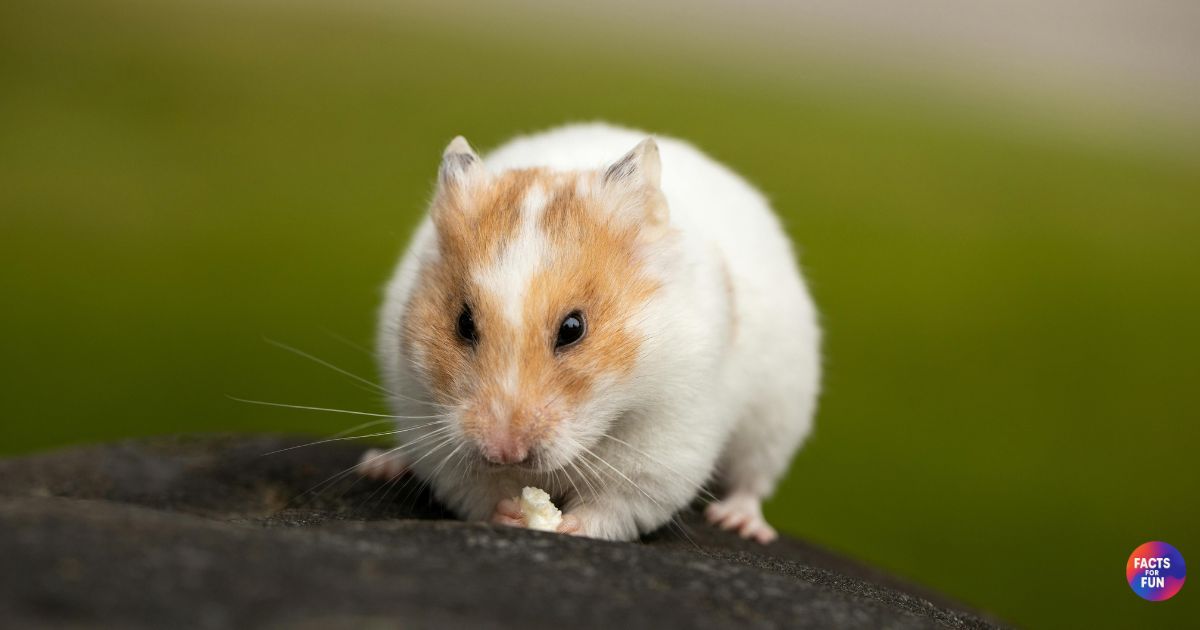
Hamsters may seem simple, but their biology and instincts reveal a world of clever adaptations. From their inflatable cheeks to their secret ability to survive the cold, these rodents are small only in size — not in personality or intelligence.
- 1. The Word “Hamster” Literally Means “To Hoard”
- 2. Cheek Pouches Can Stretch to Their Shoulders
- 3. Some Hamsters Can Swim Using Their Cheeks
- 4. Hamsters’ Teeth Grow Forever
- 5. Their Teeth Contain Regenerative Stem Cells
- 6. Hamsters Are Nearly Blind
- 7. They Navigate by Smell, Not Vision
- 8. They’re Not Fully Nocturnal — But Crepuscular
- 9. Hamsters Are Illegal in Hawaii
- 10. Wild Hamsters Can Digest Alcohol
- 11. There Are Over 20 Known Hamster Species
- 12. The European Hamster Is Critically Endangered
- 13. Most Hamsters Are Fiercely Solitary
- 14. Hamsters Reproduce at Record Speed
- 15. Mothers Sometimes Eat Their Pups
- 16. Hamsters Eat Their Own Poop — for Nutrition
- 17. They Enter Torpor When It’s Cold
- 18. Their Heart Rate Can Drop From 400 to 4 Beats per Minute
- 19. Running Wheels Are Essential
- 20. They Can Learn and Remember Complex Paths
- 21. Hamsters Keep a Clean “Bathroom Corner”
- 22. They Can Carry Diseases — Rarely
- 23. A Comfortable Environment Affects Their Mood
- 24. They Get Scared Easily
- FAQ
1. The Word “Hamster” Literally Means “To Hoard”
The name comes from the German hamstern, meaning “to hoard” or “to store.” This instinct defines their lifestyle — in the wild, hamsters collect seeds, grains, and roots, transporting them to underground chambers. Even pet hamsters will often move food from their bowl and hide it under bedding, recreating their natural survival routine.
2. Cheek Pouches Can Stretch to Their Shoulders
Hamsters have expandable cheek pouches that stretch from their mouths all the way to their shoulders. These pouches can hold food equal to their entire body weight. They’re lined with smooth, hairless skin and no salivary glands, allowing food to stay dry while stored for hours.
3. Some Hamsters Can Swim Using Their Cheeks
While most hamsters dislike water, wild species have been observed filling their cheek pouches with air to help them float. This unique behavior helps them cross small streams or flooded areas safely. However, pet owners should never test this — domestic hamsters are not adapted for swimming and can easily drown.
4. Hamsters’ Teeth Grow Forever
Their incisors never stop growing. They are self-sharpening, with the front coated in tough enamel and the back in softer dentine. This uneven wear keeps them razor-sharp. Without proper gnawing materials like wooden toys, teeth can overgrow and prevent eating — a life-threatening issue for small rodents.
5. Their Teeth Contain Regenerative Stem Cells
Studies have shown that hamster incisors contain active stem cells responsible for continuous tooth growth. Scientists study these mechanisms hoping to one day restore lost or damaged teeth in humans. It’s a natural regeneration system perfected by evolution.
6. Hamsters Are Nearly Blind
Hamsters see poorly beyond a few inches. They rely on whiskers, smell, and hearing to navigate. Babies are born blind and open their eyes around two weeks old. Because of this, hamsters recognize their owners mostly by scent and voice — not by sight.
7. They Navigate by Smell, Not Vision
Each hamster has scent glands on its flanks, which it rubs against objects to leave invisible trails. These marks help them recognize territory and find their way back to their burrow. Their sense of smell is so precise that they can distinguish between familiar and unfamiliar hamsters instantly.
8. They’re Not Fully Nocturnal — But Crepuscular
Although most people think hamsters are active only at night, many species are crepuscular — awake at dawn and dusk. This timing helps them avoid predators and heat. If your hamster runs on its wheel before sunrise, it’s simply following millions of years of natural rhythm.
9. Hamsters Are Illegal in Hawaii
Owning a hamster in Hawaii is against the law. The warm climate and abundant vegetation would allow escaped pets to survive and form colonies, threatening agriculture and native wildlife. Similar bans exist in some parts of Australia for the same reason.
10. Wild Hamsters Can Digest Alcohol
Syrian hamsters evolved an unusual adaptation — they can efficiently process alcohol. Wild hamsters store fruits underground, which ferment naturally. To avoid intoxication, they developed large livers that break down ethanol quickly. This makes them one of the few animals resistant to alcohol poisoning.
11. There Are Over 20 Known Hamster Species
Scientists recognize more than 20 species in the subfamily Cricetinae. Only five are commonly kept as pets: Syrian (Golden), Roborovski, Campbell’s, Winter White, and Chinese hamsters. Each has its own lifespan, behavior, and social preferences — from solitary to group-living.
Read more: Types of Hamsters: 15+ Fun Facts About Different Species
12. The European Hamster Is Critically Endangered
The European hamster (Cricetus cricetus), once widespread across Europe, has lost over 75% of its habitat. Intensive farming, pesticide use, and climate change have driven it to the brink of extinction. Conservation efforts are underway in France and Germany to protect remaining populations.
13. Most Hamsters Are Fiercely Solitary
Hamsters may look friendly, but they are territorial loners. Especially Syrian hamsters — they attack intruders on sight. In the wild, each hamster maintains its own burrow network and defends it aggressively. Dwarf species can sometimes live in pairs, but only under careful supervision.
14. Hamsters Reproduce at Record Speed
Their gestation period is only 15–30 days, one of the shortest among mammals. A single female can give birth to up to 13 babies and may have several litters per year. She can become pregnant again within 24 hours of giving birth — nature’s way of ensuring survival in harsh environments.
15. Mothers Sometimes Eat Their Pups
Although shocking, this behavior is instinctual. If a mother hamster feels threatened, lacks food, or senses that some babies are weak, she may eat them to protect the rest. It’s a natural survival mechanism, not cruelty.
16. Hamsters Eat Their Own Poop — for Nutrition
This process, called coprophagy, allows them to reabsorb nutrients from their food. Their special “night feces” are soft and full of B vitamins produced by gut bacteria. By re-eating them, hamsters extract maximum nutrition from every seed.
17. They Enter Torpor When It’s Cold
When temperatures drop below 60°F (15°C), hamsters may enter a hibernation-like state called torpor. Their metabolism slows dramatically to save energy. Syrian hamsters block the burrow entrance with soil and wake up periodically to eat stored food.
18. Their Heart Rate Can Drop From 400 to 4 Beats per Minute
During torpor, a hamster’s heartbeat slows from 400 bpm to just 4, while breathing reduces to two breaths per minute. This near-suspended animation lets them survive harsh winters without eating for days.
19. Running Wheels Are Essential
In nature, hamsters can travel up to 8 miles (13 km) per night. Without exercise, they become stressed or overweight. However, the wheel must be large enough to prevent spinal problems. For Syrians, at least 8 inches (20 cm) in diameter is ideal.
20. They Can Learn and Remember Complex Paths
Hamsters have impressive spatial memory. They can remember maze layouts and the location of food for weeks. Some even respond to their names and simple commands when trained with positive reinforcement — a sign of their surprising intelligence.
21. Hamsters Keep a Clean “Bathroom Corner”
Despite their messy appearance, hamsters are very clean. They choose a specific corner of their cage as a toilet area and keep the rest tidy. Many owners successfully train them to use a small litter box filled with sand or paper pellets.
22. They Can Carry Diseases — Rarely
Hamsters can transmit illnesses like salmonella or lymphocytic choriomeningitis virus (LCMV), though such cases are extremely rare. Washing hands after handling and keeping cages clean is usually enough to prevent infection.
23. A Comfortable Environment Affects Their Mood
Hamsters raised in enriched cages with tunnels, toys, and nesting material show more curiosity and “optimistic” behavior in experiments. Those kept in barren cages exhibit anxiety and depression-like symptoms. Environment matters even for tiny pets.
24. They Get Scared Easily
Hamsters are prey animals, so they startle easily. Always approach them slowly from the side and talk softly before picking them up. This reduces stress and builds trust — making them friendlier and calmer over time.
FAQ
1. How many hamster species exist?
There are about 20 known species of hamsters, but only five are domesticated. Each species has unique behavior and size — for example, Syrian hamsters are large and solitary, while Roborovski dwarfs are tiny and social.
2. How long do hamsters live?
On average, hamsters live 2–3 years. Roborovski hamsters can live slightly longer, while Syrians often reach about 2.5 years with proper diet and housing.
3. Do hamsters hibernate?
Not exactly. Hamsters enter a temporary hibernation-like state called torpor when it’s too cold. Their heart and breathing slow dramatically until conditions improve.
4. Why do hamsters stuff food in their cheeks?
It’s an instinct for survival. In the wild, hamsters collect food and transport it to underground storage chambers. Even pet hamsters mimic this hoarding behavior inside their cages.
5. Can two hamsters live together?
Only dwarf hamsters like Roborovski or Campbell’s may coexist peacefully. Syrian hamsters must always live alone to avoid fighting, injury, or death.
6. What do hamsters eat?
They are omnivores. A balanced diet includes grains, seeds, vegetables, fruits, and occasionally protein such as boiled egg or mealworms. Avoid citrus and sugary treats.
7. Why does my hamster run at night?
Hamsters are crepuscular — most active at dawn and dusk. Running on a wheel mimics their natural instinct to travel long distances searching for food.
8. Are hamsters clean pets?
Yes, they constantly groom themselves and even choose a corner for waste. Sand baths can help them remove excess oils and keep fur soft and healthy.
9. Why are hamsters banned in Hawaii?
The tropical climate could allow escaped hamsters to establish wild populations, threatening agriculture and native species. For this reason, imports are prohibited.
10. How can I tell if my hamster is happy?
A happy hamster eats well, explores its cage, builds nests, and reacts calmly to your voice. Signs of stress include biting, hiding constantly, or losing fur.
Sources
- Wikipedia – Hamster
- National Geographic – Hamsters
- McGill University – Hamster Behavior and Physiology
- PetMD – Hamster Care Guide
- WWF – Small Mammals of the World
- Smithsonian – Rodent Adaptations
- Iowa State University – Hamster Studies
- New World Encyclopedia – Hamster
▶️ Curious why hamsters can store so much food in their cheeks? Watch our short video!