
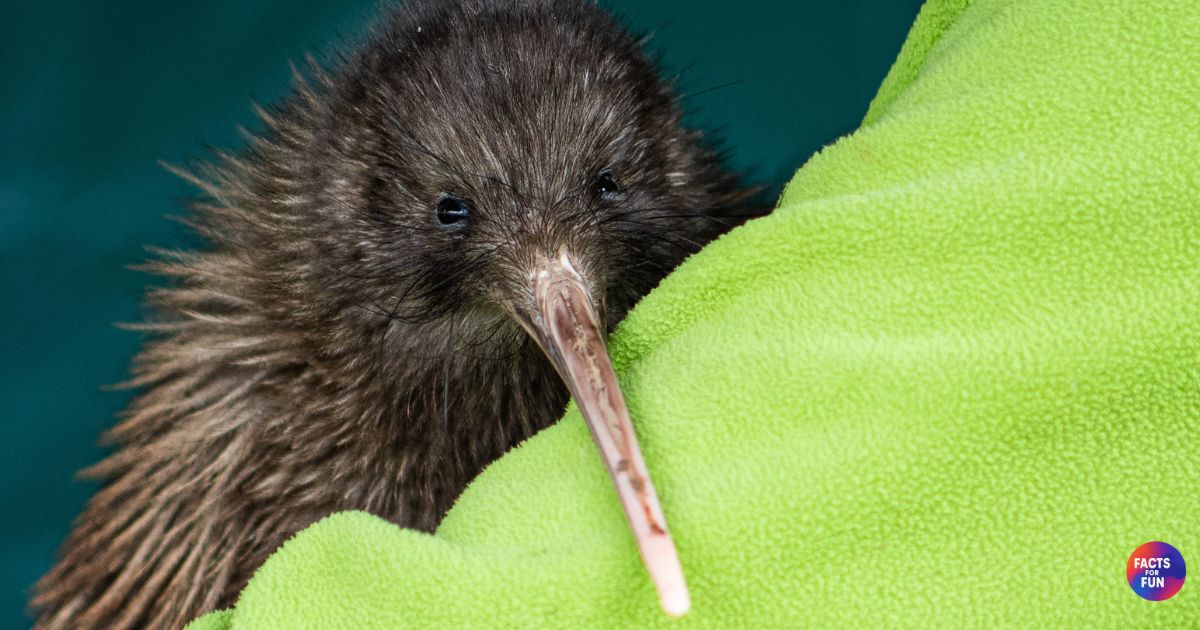
Kiwi birds are unlike any other creatures on Earth — small, flightless, and deeply mysterious. Native only to New Zealand, these nocturnal birds have fur-like feathers, mammal-like bones, and the largest egg-to-body ratio of any bird. Here are 30 fascinating facts about these remarkable icons of Aotearoa.
- National Treasure of New Zealand
- There Are Five Kiwi Species
- The Fruit Is Named After the Bird
- The “Honorary Mammal” of the Bird World
- Solid Bones with Bone Marrow
- Body Temperature Like Humans
- Feathers That Feel Like Fur
- Females Have Two Functional Ovaries
- The World’s Largest Egg (for Body Size)
- Females Must Fast Before Laying
- Closest Relatives Are Giant Extinct Birds
- Tiny, Useless Wings
- Nostrils on the Tip of the Beak
- A Bird That Hunts by Smell
- They Sense Vibrations Underground
- Nocturnal Lifestyle
- Omnivorous Diet
- Fiercely Territorial
- They Communicate by Calling “Ki-wi!”
- No Tail but Powerful Legs
- Monogamous for Life
- Dads Take Over Incubation
- Fully Developed Chicks
- Chicks Are Never Fed by Parents
- No Egg Tooth — They Kick Their Way Out
- Surprisingly Fast Runners
- High Chick Mortality
- Threatened by Introduced Predators
- Exceptionally Low Metabolism
- Long-Lived Birds
- FAQ
National Treasure of New Zealand
The kiwi is an endemic, flightless bird found only in New Zealand, where it holds the status of a national treasure (taonga). Its symbolic importance is so strong that the word Kiwi is used internationally to describe New Zealanders themselves.
There Are Five Kiwi Species
Scientists recognize five living kiwi species: the Brown Kiwi, Great Spotted Kiwi (roroa), Little Spotted Kiwi (pukupuku), Rowi, and Tokoeka. Among them, the Rowi is the rarest, surviving mainly on the South Island’s west coast.
The Fruit Is Named After the Bird
The popular kiwifruit was named after the bird because it is brown, fuzzy, and distinctly New Zealand — the perfect marketing tribute to the country’s beloved symbol.
The “Honorary Mammal” of the Bird World
Kiwis are often called “honorary mammals” because they share many traits with mammals: low body temperature, strong sense of smell, solid bones filled with marrow, and a nocturnal lifestyle.
Solid Bones with Bone Marrow
Unlike most birds that have hollow bones to make flight easier, kiwi bones are dense and filled with marrow, more like those of mammals. This suits their ground-dwelling lifestyle.
Body Temperature Like Humans
A kiwi’s body temperature averages 37–38 °C (98–100 °F) — much lower than most birds, but nearly identical to that of humans and mammals.
Feathers That Feel Like Fur
Kiwi feathers are long, soft, and hair-like, providing camouflage and insulation instead of flight. Their texture feels more like fur than typical feathers.
Females Have Two Functional Ovaries
Most birds have only one functional ovary, but female kiwis have two, another mammal-like feature that sets them apart.
The World’s Largest Egg (for Body Size)
A single kiwi egg can make up 20 % of the female’s body weight — the largest ratio in the bird world. It can weigh up to 450 g, nearly the size of an ostrich egg from a bird barely chicken-sized.
Females Must Fast Before Laying
Because the egg takes up almost all the space inside her body, the female stops eating for two or three days before laying it. It’s one of the most energy-demanding reproductive feats in nature.
Closest Relatives Are Giant Extinct Birds
DNA research reveals that kiwis are most closely related to the elephant birds of Madagascar, not to New Zealand’s own extinct moas — a surprising evolutionary twist.
Tiny, Useless Wings
Kiwis are flightless ratites. Their tiny 3 cm (1.2 in) wings are hidden beneath the feathers and serve no purpose in flight — they only show that these birds once had flying ancestors.
Nostrils on the Tip of the Beak
The kiwi is the only bird in the world with nostrils at the very tip of its long beak, which it uses to sniff out insects and worms beneath the soil.
A Bird That Hunts by Smell
Because kiwis have very poor eyesight, they rely almost entirely on smell. Their nostrils and sensory pits help them detect food underground, even in complete darkness.
They Sense Vibrations Underground
Tiny sensory pits on the beak’s tip allow kiwis to detect subtle ground vibrations, helping them locate hidden prey like worms or larvae.
Nocturnal Lifestyle
Kiwis are nocturnal — active at night and resting during the day in burrows or hollow logs. Their sensitive hearing and smell help them navigate and hunt after dark.
Omnivorous Diet
They eat worms, insects, snails, small crustaceans, and fallen fruits or seeds. Their varied omnivorous diet makes them key contributors to forest soil health and seed dispersal.
Fiercely Territorial
A kiwi’s territory can reach 50 hectares (124 acres), which pairs defend aggressively. Battles can get intense, though serious injuries are rare.
They Communicate by Calling “Ki-wi!”
Male and female kiwis call back and forth with high-pitched cries that sound like “kee-wee.” They also grunt or hiss when threatened — the origin of their name.
No Tail but Powerful Legs
Kiwis have no visible tail, but their muscular legs make up nearly one-third of their body weight. These strong limbs help them run fast, dig burrows, and kick when threatened.
Monogamous for Life
Most kiwi pairs are monogamous for decades, sometimes staying together for more than 20 years. In denser areas, they may occasionally switch partners.
Dads Take Over Incubation
The male kiwi does most of the incubation work, sitting on the egg for about 75–90 days, leaving only briefly at night to feed.
Fully Developed Chicks
Kiwi chicks hatch fully feathered and independent. They look like miniature adults and rely on their egg’s rich yolk for the first few days after hatching.
Chicks Are Never Fed by Parents
Unlike most birds, kiwi parents do not feed their young. The chicks leave the nest after about a week to begin foraging on their own.
No Egg Tooth — They Kick Their Way Out
Baby kiwis hatch by kicking through the eggshell with their strong legs, as they lack the typical “egg tooth” found in most bird species.
Surprisingly Fast Runners
Though they appear clumsy, kiwis can outrun a human when startled. Their speed and agility often surprise researchers in the wild.
High Chick Mortality
In predator-infested regions, only 5–10 % of kiwi chicks survive to adulthood. Stoats kill most young, while dogs pose the main threat to adults.
Threatened by Introduced Predators
Before humans arrived, New Zealand had no native land mammals. Introduced predators — stoats, cats, dogs, and ferrets — devastated kiwi populations and destroyed 80 % of their habitat.
Exceptionally Low Metabolism
Kiwis have the lowest metabolic rate of any bird. This slow metabolism helps them conserve energy in cool, damp forest environments.
Long-Lived Birds
A wild kiwi can live 25–50 years, and in captivity even longer — up to 60 years. Their slow metabolism and low stress lifestyle help them achieve remarkable longevity.
FAQ
Do kiwi birds fly?
No. Kiwis are flightless birds with tiny, vestigial wings hidden beneath their feathers. Their bone structure and muscle composition are designed for running and digging, not flying.
Why are kiwi birds called “honorary mammals”?
Because they share mammal-like traits — such as fur-like feathers, two functioning ovaries, solid bones with marrow, and a strong sense of smell — making them unique among birds.
What do kiwi birds eat?
Kiwis are omnivores that feed on worms, insects, larvae, small crustaceans, seeds, and fruits. They use their long beaks and keen sense of smell to locate food underground.
Where do kiwi birds live?
All kiwi species live in New Zealand’s native forests, grasslands, and scrublands. Each species occupies distinct regions across the North and South Islands.
Why are kiwi birds endangered?
Habitat loss and introduced predators such as stoats, cats, and dogs have drastically reduced their numbers. Conservation programs now protect nesting areas and hatch chicks in safe facilities.
Sources
- Kiwi (bird) – Wikipedia
- WWF New Zealand – 10 Facts About the Kiwi
- San Diego Zoo – Kiwi
- Smithsonian’s National Zoo – North Island Brown Kiwi
- Save the Kiwi – Honorary Mammals
- New Zealand Wildlife Guide – Brown Kiwi Facts
▶️ Why does the kiwi bird break almost every rule of nature? Watch our short video to find out!