
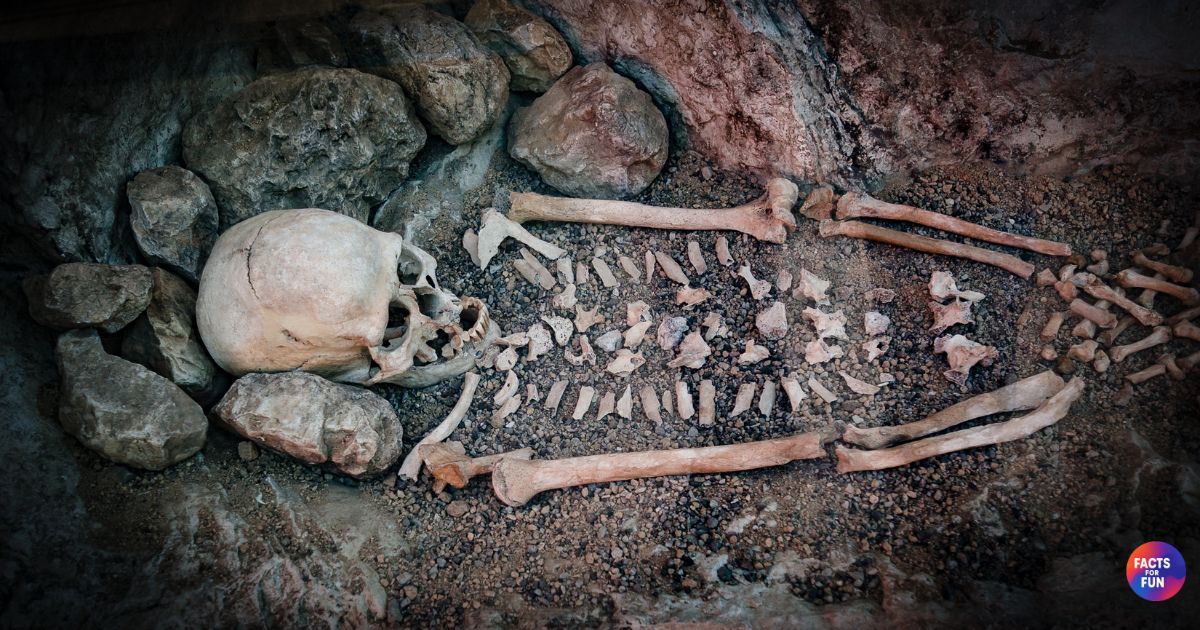
For a long time, human evolution was pictured as a simple ladder leading straight to us, Homo sapiens. But modern science tells a very different story. More than 20 ancient human species are known to science today, and many of them lived at the same time as parallel branches of humanity. They were not just our ancestors, but alternative versions of humans, each adapted to its own world. Here are detailed facts about these remarkable relatives and how they shaped who we are.
- More Than 20 Human Species Once Shared the Planet
- Human Evolution Was a Branching Experiment, Not a Straight Path
- Neanderthals Were Powerful, Skilled, and Highly Adapted
- Denisovans Were Discovered Through DNA, Not Skeletons
- A Hybrid Girl Proved Ancient Humans Interbred
- Neanderthal DNA Still Shapes Modern Humans
- Denisovan Genes Help People Live at High Altitude
- A Ghost Human Species May Be Hidden in Our DNA
- Homo Erectus Was the Greatest Traveler and Survivor
- The Hobbit Humans of Flores Defied Expectations
- Homo Naledi May Have Practiced Ritual Behavior
- Ancient Humans Showed Compassion and Care
- Neanderthals Were Artists and Early Chemists
- Homo Antecessor May Have Been Europe’s Pioneers
- Human Origins Were Pan-African, Not From One Spot
- Fossil Faces Push Our Species Back to 300,000 Years
- Ancient DNA Can Be Recovered From Cave Dirt
- Tiny Bone Fragments Can Reveal Entire Species
- Making Tools May Have Prepared the Brain for Language
- Modern Humans Are a Living Genetic Mosaic
- Most Human Species Vanished, One Continued
- FAQ
More Than 20 Human Species Once Shared the Planet
Scientists have identified over 20 species in the human genus Homo, including Neanderthals, Denisovans, Homo erectus, Homo floresiensis, Homo naledi, and several others. Each species had its own anatomy, behavior, and survival strategies. Some lived for hundreds of thousands of years, while others survived only briefly. This diversity shows that being human was once not a single form, but a whole family of intelligent creatures.
Human Evolution Was a Branching Experiment, Not a Straight Path
Rather than a simple line from ape to modern human, evolution looks more like a tangled tree. Different human species split off, evolved separately, and sometimes met again. Some branches ended in extinction, while others merged back through interbreeding. Homo sapiens is just the branch that happened to survive, not necessarily the “goal” of evolution.
Neanderthals Were Powerful, Skilled, and Highly Adapted
Neanderthals lived in Europe and western Asia for over 300,000 years. They were stocky, muscular, and built for cold Ice Age climates. Their brains were as large as, and sometimes larger than, ours. They hunted big animals, made complex stone tools, wore clothing, and likely used language. Far from being simple cave dwellers, they were intelligent humans adapted to harsh environments.
Denisovans Were Discovered Through DNA, Not Skeletons
Denisovans are one of the most mysterious human species. They were identified from tiny bone fragments and teeth found in Denisova Cave in Siberia. From these remains, scientists extracted DNA and realized it belonged to a previously unknown human group, related to Neanderthals but genetically distinct. Despite having very few fossils, their DNA shows they once ranged across large parts of Asia.
A Hybrid Girl Proved Ancient Humans Interbred
One of the most astonishing discoveries was a bone fragment from a teenage girl who lived about 90,000 years ago. Genetic analysis revealed she had a Neanderthal mother and a Denisovan father. This first-generation hybrid, nicknamed “Denny,” proved that ancient human species didn’t just coexist, they formed families. Interbreeding was part of human life, not a rare accident.
Neanderthal DNA Still Shapes Modern Humans
Today, most people outside Africa carry about 1 to 4 percent Neanderthal DNA. These inherited genes affect how our immune system responds to diseases, how our skin handles sunlight, and even aspects of metabolism. Some genes were helpful for adapting to colder Eurasian climates, while others may increase risks for allergies or certain illnesses. Our bodies still carry traces of these ancient cousins.
Denisovan Genes Help People Live at High Altitude
Modern Tibetans carry a special gene variant called EPAS1 that helps them cope with thin mountain air. This gene came from Denisovans through ancient interbreeding. Without it, living above 4,000 meters would cause dangerous increases in red blood cells. This is one of the clearest examples of how ancient humans directly helped modern people survive extreme environments.
A Ghost Human Species May Be Hidden in Our DNA
Advanced genetic methods, including artificial intelligence, suggest that some modern populations carry DNA from an unknown archaic human species. This “ghost” group is neither Neanderthal nor Denisovan. No fossils have yet been linked to it, but its genetic fingerprint hints that more human species once existed than we currently know.
Homo Erectus Was the Greatest Traveler and Survivor
Homo erectus appeared nearly 2 million years ago and survived longer than any other human species. They were the first humans to leave Africa and spread into Asia and possibly Europe. They controlled fire, hunted in groups, and adapted to many environments. Some populations survived in Indonesia until about 110,000 years ago, overlapping with modern humans.
The Hobbit Humans of Flores Defied Expectations
On the island of Flores in Indonesia lived Homo floresiensis, a tiny human species only about 1.1 meters tall. Their brains were small, yet they made tools and hunted animals, including dwarf elephants. Their size likely resulted from island dwarfism, where limited resources favor smaller bodies. They survived until at least 50,000 years ago, possibly alongside Homo sapiens.
Homo Naledi May Have Practiced Ritual Behavior
In a deep cave system in South Africa, scientists discovered remains of at least 15 individuals of Homo naledi. The bodies appear to have been deliberately placed in hard-to-reach chambers. If confirmed, this suggests purposeful disposal of the dead, a behavior once thought to belong only to humans with large brains. Yet Homo naledi had a relatively small brain, challenging ideas about intelligence and ritual.
Ancient Humans Showed Compassion and Care
A skull found in Dmanisi, Georgia, belonged to a human who had lost all teeth and lived for years afterward. This individual could not chew food alone and must have been cared for by others. This suggests empathy and social support existed nearly 2 million years ago, showing that kindness may be as old as humanity itself.
Neanderthals Were Artists and Early Chemists
In Spanish caves, markings older than 64,000 years are now attributed to Neanderthals. They also made jewelry from shells and pigments. Even more impressive, they produced glue from birch bark by heating it in low oxygen conditions. This required careful control of fire and materials, showing advanced planning and chemical knowledge.
Homo Antecessor May Have Been Europe’s Pioneers
Homo antecessor lived in Spain around 800,000 years ago and may represent one of the earliest human species in Europe. Fossils show a mix of modern and archaic features. Evidence from bones suggests they sometimes practiced cannibalism, possibly as part of territorial conflict rather than ritual. Protein analysis links them closely to the common ancestor of Neanderthals and modern humans.
Human Origins Were Pan-African, Not From One Spot
Rather than emerging from a single birthplace, Homo sapiens evolved across Africa in many connected populations. Climate changes repeatedly separated and reunited groups, allowing genes and ideas to spread. Our species formed as a network, not a single tribe, which explains our deep genetic diversity today.
Fossil Faces Push Our Species Back to 300,000 Years
Fossils from Jebel Irhoud in Morocco show humans with modern-looking faces living around 300,000 years ago. Their brain shape was still more elongated, but these finds pushed the origin of Homo sapiens back by 100,000 years. It shows that becoming modern was a gradual process, not a sudden leap.
Ancient DNA Can Be Recovered From Cave Dirt
Scientists can now extract ancient human DNA from sediments in caves, even when no bones remain. Traces left by skin cells, blood, or waste allow researchers to map where Neanderthals and Denisovans lived over time. This has revolutionized archaeology and revealed occupations invisible in the fossil record.
Tiny Bone Fragments Can Reveal Entire Species
The hybrid girl from Denisova Cave was found using a method called ZooMS, which identifies species from protein patterns in bone fragments. Among thousands of tiny pieces, this method flagged one as human, leading to a breakthrough discovery. It shows that major finds can come from almost invisible remains.
Making Tools May Have Prepared the Brain for Language
Some scientists think stone tool making helped wire the brain for language. The precise hand movements required activate regions also involved in speech and grammar. Over time, these shared neural circuits may have paved the way for complex communication.
Modern Humans Are a Living Genetic Mosaic
Our DNA is a blend of Homo sapiens, Neanderthals, Denisovans, and possibly unknown humans. We are not genetically “pure,” but a mosaic shaped by many ancient encounters. Every person carries a small archive of extinct humanity inside their cells.
Most Human Species Vanished, One Continued
Climate shifts, small populations, and competition likely drove most human species to extinction. Homo sapienssurvived, expanded, and absorbed others through interbreeding. But we are not alone in our story. We are the last chapter of a much larger human experiment.
FAQ
How many ancient human species are known to science?
Scientists have identified more than 20 species within the human genus Homo. New discoveries and genetic methods may increase this number as more fossils and DNA evidence are found.
Did Neanderthals and modern humans really interbreed?
Yes. Genetic studies show that people outside Africa carry 1 to 4 percent Neanderthal DNA. This means Neanderthals and early Homo sapiens had children together when they met in Eurasia.
Who were the Denisovans if we barely have their bones?
Denisovans are known mainly from DNA extracted from small bone fragments and teeth found in Siberia and Asia. Their genetic legacy lives on today in people from Oceania and parts of Asia.
Were ancient humans intelligent like us?
Many ancient humans showed complex behavior. Neanderthals made tools, art, and adhesives. Others hunted strategically and cared for the weak. Intelligence likely existed in different forms across species.
Why did only Homo sapiens survive?
There is no single answer. Climate changes, larger populations, flexible behavior, and social networks may have helped Homo sapiens outcompete or absorb other human species over time.
Sources
Wikipedia – Human evolution
Wikipedia – Neanderthal
Wikipedia – Denisovan
Smithsonian National Museum of Natural History – Human Origins
Max Planck Institute for Evolutionary Anthropology – Ancient DNA Research
Homo sapiens-specific evolution unveiled by ancient southern African genomes
Sapience – Five Human Species You May Not Know About