
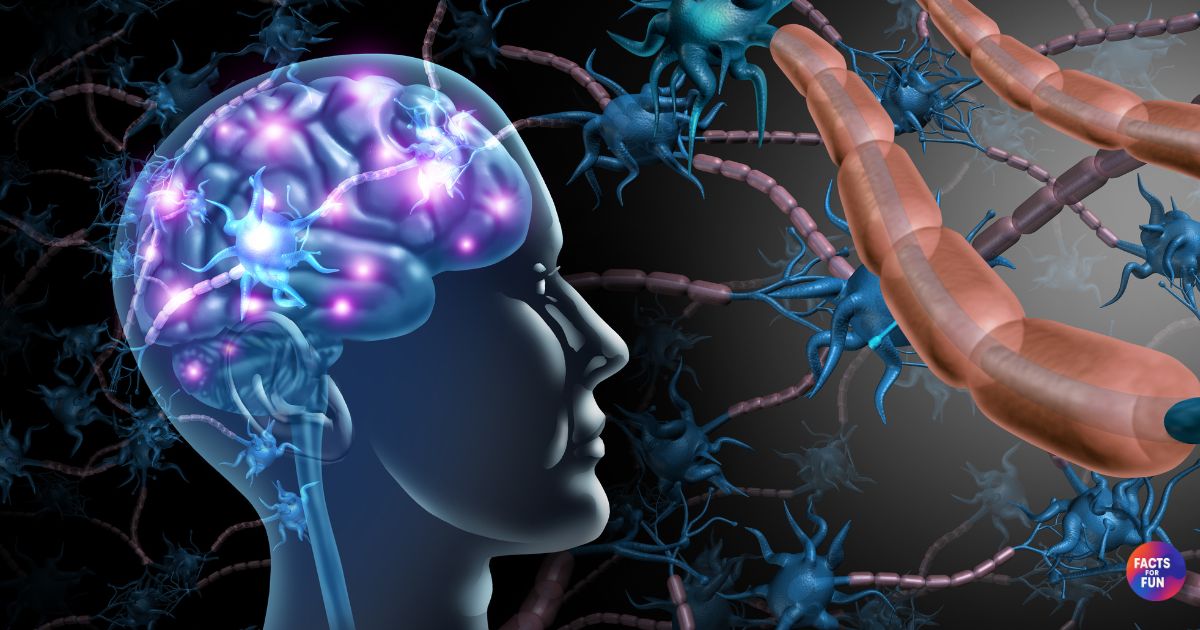
The human brain is a marvel of evolution — a dense network of billions of neurons that controls every thought, movement, and feeling. It learns, adapts, and even heals itself. Here are some of the most fascinating facts about this extraordinary organ.
Table of Contents:
- The Brain Is 75% Water
- Multitasking Is a Myth
- The Brain Itself Doesn’t Feel Pain
- The Brain Can Rewire Itself
- The Brain Generates Enough Power for a Light Bulb
- The Brain Uses 20% of the Body’s Energy
- The Most Complex Structure in the Universe
- Thoughts Travel Faster Than a Race Car
- The Brain Is 60% Fat
- The Brain’s Storage Capacity Is Virtually Limitless
- Forgetting Is a Form of Intelligence
- The Brain Matures Fully Around Age 25
- Exercise Boosts Brain Growth
- The Brain Contains 86 Billion Neurons
- The Brain Never Sleeps
- Every Brain Is Unique
- Music Activates the Whole Brain
- Brain Freeze Is a Safety Mechanism
- Decision-Making Is a Team Effort
- Cholesterol Helps You Think and Learn
- FAQ: Understanding the Human Brain
The Brain Is 75% Water
Almost three quarters of your brain is water. This high water content cushions it against impact and keeps neurons communicating efficiently. Even mild dehydration can make it harder to concentrate or remember things, which is why drinking enough water is vital for mental clarity and alertness.
Multitasking Is a Myth
Our brains aren’t built for true multitasking. What feels like juggling multiple things at once is actually rapid task-switching. Each switch forces your brain to reorient itself, wasting time and increasing mistakes. Studies show productivity can drop by up to 40% when we try to multitask.
The Brain Itself Doesn’t Feel Pain
Surgeons can operate on the brain while a patient is awake because the brain has no pain receptors. The ache of a headache or migraine comes not from the brain itself, but from nerves, blood vessels, or protective membranes surrounding it. Your brain can sense the world — but not itself.
The Brain Can Rewire Itself
One of the brain’s most remarkable abilities is neuroplasticity — the capacity to reorganize and form new connections throughout life. Every time you learn a new skill, form a habit, or recover from injury, your brain physically changes. This adaptability explains how people can regain abilities after strokes or trauma.
The Brain Generates Enough Power for a Light Bulb
At rest, your brain produces between 12 and 25 watts of electricity — enough to power a small light bulb. That energy comes from the glucose you eat, which fuels the constant flow of electrical impulses that allow you to think, move, and feel.
The Brain Uses 20% of the Body’s Energy
Although it makes up only about two percent of body weight, the brain consumes roughly one fifth of your body’s oxygen and calories. That’s why skipping meals or sleep can quickly drain your mental energy. After only a few minutes without oxygen, brain cells begin to die.
The Most Complex Structure in the Universe
No computer or machine matches the human brain’s complexity. With around 86 billion neurons and up to 100 trillion connections between them, it’s more intricate than any network ever built. The brain’s folded surface increases its area dramatically, packing in more neurons for advanced reasoning and creativity.
Thoughts Travel Faster Than a Race Car
Electrical impulses travel through your neurons at speeds of up to 268 miles per hour. That’s faster than a Formula 1 car. This lightning-fast communication allows your body to react almost instantly when you touch something hot or hear a loud sound.
The Brain Is 60% Fat
Your brain is the fattiest organ in the body, composed of nearly 60% fat. These fats — especially omega-3 and omega-6 fatty acids — are critical for building cell membranes, reducing inflammation, and supporting cognitive health. That’s one reason why nutrition has such a strong impact on brain performance.
The Brain’s Storage Capacity Is Virtually Limitless
Scientists estimate the human brain can store about 2.5 petabytes of information — roughly equal to 20,000 iPhones filled with photos and videos. Yet it doesn’t store data like a computer; instead, it encodes memories through patterns of neural connections that grow stronger each time you recall them.
Forgetting Is a Form of Intelligence
Forgetting is not a flaw — it’s a feature. The brain intentionally filters out old or irrelevant memories so it can focus on what matters most. This process helps us adapt, avoid overload, and make better decisions in new situations. Forgetting allows flexibility, not failure.
The Brain Matures Fully Around Age 25
While most of the brain’s growth happens in childhood, it continues to develop into the mid-twenties. The last region to mature is the prefrontal cortex — responsible for planning, prioritizing, and impulse control. This explains why teenagers often act on emotion rather than logic: their “executive center” is still under construction.
Exercise Boosts Brain Growth
Physical exercise benefits the mind as much as the body. Aerobic activities like running or swimming increase blood flow and oxygen to the brain, stimulating the growth of new neurons in regions that manage memory and learning. Regular movement can even protect against age-related cognitive decline.
The Brain Contains 86 Billion Neurons
Each of those 86 billion neurons can form thousands of synapses, creating a communication network so vast it defies imagination. Signals jump between neurons through tiny chemical messengers called neurotransmitters — the invisible language of your thoughts.
The Brain Never Sleeps
Even when you’re asleep, your brain stays busy. It organizes memories, processes emotions, and clears away metabolic waste that builds up during the day. The idea that humans use only ten percent of their brain is a myth; nearly every region works around the clock.
Every Brain Is Unique
Just like fingerprints, every human brain has its own pattern of neural connections. Scientists can identify individuals by their “connectome,” a map of how different areas of the brain communicate. This unique wiring explains why two people can experience the same event but remember it differently.
Music Activates the Whole Brain
Music engages multiple regions at once — those that handle sound, movement, emotion, and even memory. Listening to music releases dopamine, the “feel-good” chemical, which can improve focus and recall. In therapy, rhythm and melody help rebuild neural pathways for speech after brain injuries.
Brain Freeze Is a Safety Mechanism
That sharp pain when you eat ice cream too fast is called “sphenopalatine ganglioneuralgia.” When something cold touches the roof of your mouth, blood vessels quickly constrict, then expand, triggering a pain response in the forehead. It’s your brain’s way of telling you to slow down.
Decision-Making Is a Team Effort
There isn’t one single “decision center” in the brain. Instead, three separate circuits — involving the frontal cortex, limbic system, and memory regions — work together to weigh risks, recall experience, and guide choices. Emotions and logic are constantly negotiating every decision you make.
Cholesterol Helps You Think and Learn
About a quarter of your body’s cholesterol is found in the brain, where it plays a vital role in forming and maintaining neuron membranes. Cholesterol supports communication between brain cells and is essential for learning and memory. Without it, neural connections would literally fall apart.
FAQ: Understanding the Human Brain
What makes the human brain different from other animals?
The human brain’s size isn’t the only advantage — it’s the density of connections and the development of the prefrontal cortex. This region allows abstract thought, complex planning, language, and imagination that other species simply don’t possess.
Can the brain heal after injury?
Yes. The brain can rewire itself through neuroplasticity, forming new pathways to compensate for damaged areas. Recovery often depends on training, therapy, and mental stimulation that encourage the brain to rebuild lost functions.
Why is sleep so important for the brain?
During deep sleep, the brain clears toxins, consolidates memories, and resets emotional balance. Lack of sleep can reduce focus, weaken immunity, and even increase the risk of neurodegenerative diseases.
Does music really improve brain function?
Music stimulates multiple brain areas at once, enhancing mood, memory, and creativity. Musicians often have stronger connections between the hemispheres, and rhythmic training can improve language and motor skills.
Is it true that we only use 10% of our brain?
No. Modern brain imaging shows that nearly all areas of the brain are active throughout the day. The level of activity changes depending on what you’re doing — but no part lies completely dormant.
Sources
- Wikipedia – Human Brain
- Johns Hopkins Medicine – Brain Facts
- Plymouth University – Neuroscience Department
- Jim Kwik – “5 Brain Facts That Will Blow Your Mind”
- World Brain Day – “22 Facts About the Brain”
- Nature Reviews Neuroscience – “Seven Fascinating Facts About the Brain”
- Yale University – Decision-Making Circuits Study