
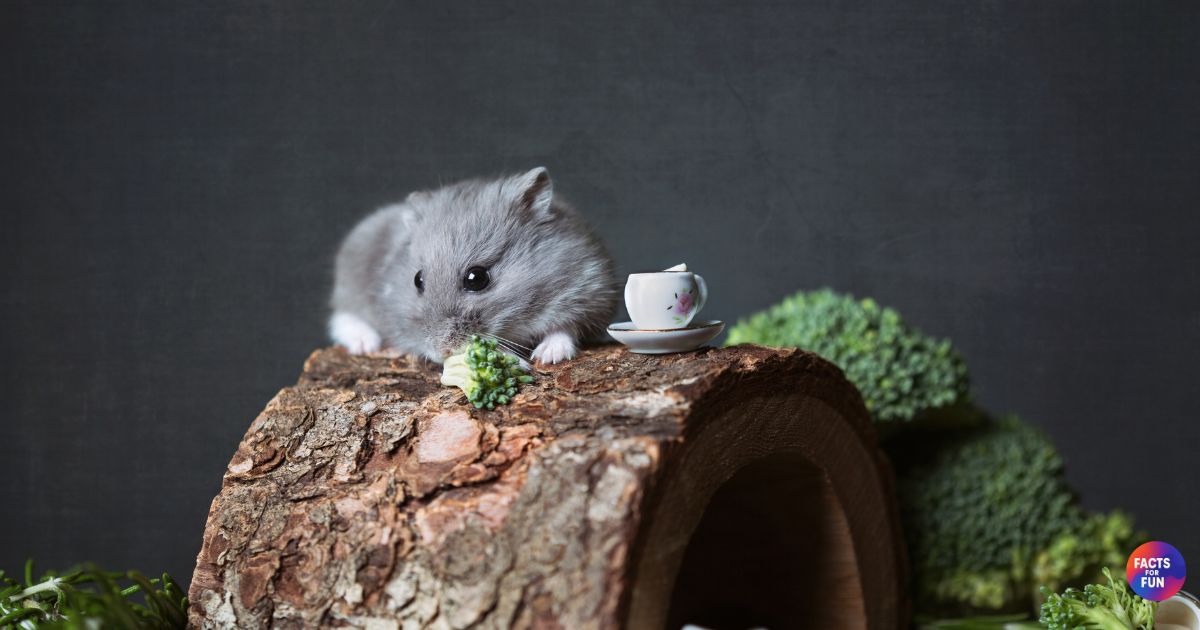
Hamsters belong to the subfamily Cricetinae, which includes about 19–20 species across seven genera. Yet only a handful have become our cozy companions at home. Each type of hamster has its own size, personality, and level of care — from the friendly Syrian to the lightning-fast Roborovski.
If you haven’t yet explored the bigger picture, check out 24 Fun Facts About Hamsters: Tiny Hoarders With Big Secrets — it reveals how all hamsters evolved, why they hoard food, and how their tiny bodies survive cold and darkness.
- There Are Around 20 Hamster Species in the World
- Syrian Hamsters Are the “Classic” Pet Hamsters
- Dwarf Hamsters Are Small, Fast, and Social
- The Roborovski Hamster Is the Smallest Mammal You’ll Ever Own
- Campbell’s Hamsters Are the Most Common Dwarfs in Pet Stores
- Winter White Hamsters Can Change Color in Winter
- Chinese Hamsters Have “Mouse-Like” Tails
- Syrian Hamsters Came From Just One Family
- Dwarf Hamsters Can Sometimes Live Together — But Not Always
- Syrian and Chinese Hamsters Must Always Live Alone
- European Hamsters Are Wild Giants — and Critically Endangered
- Turkish (Brandt’s) Hamsters Are Wild Cousins of the Syrian
- Mongolian and Gansu Hamsters Survive in Harsh Deserts
- Hamsters Vary Greatly in Temperament
- Different Species Have Different Lifespans
- All Hamsters Have Expanding Cheeks — But They Use Them Differently
- Each Species Has Its Own Ideal Cage Type
- FAQ
There Are Around 20 Hamster Species in the World
Scientists classify hamsters into seven genera (Mesocricetus, Phodopus, Cricetulus, Cricetus, Allocricetulus, Cansumys, and Tscherskia). Most species live across Europe and Asia, from the dry steppes of Mongolia to the green fields of France. Only about five species have adapted to life with humans. The rest remain wild and elusive, often spending most of their lives underground.
Syrian Hamsters Are the “Classic” Pet Hamsters
The Syrian hamster (Mesocricetus auratus), also known as the Golden hamster, is the largest and most famous of all. Adults grow 5–7 inches (13–18 cm) long and come in dozens of colors and fur types, including the fluffy “Teddy Bear” variety. They are solitary by nature and must live alone — even siblings will fight if kept together.
Despite that, Syrians are remarkably tame with humans, often learning to recognize their owner’s scent and voice. Their size makes them easier to handle, and their calm nature suits families and beginners. However, they need large cages (at least 800 square inches of floor space) and daily mental stimulation.
Dwarf Hamsters Are Small, Fast, and Social
The term “dwarf hamster” usually refers to three small species in the Phodopus genus — Roborovski, Campbell’s, and Winter White. They measure only 2–4 inches long but move with the speed of a wind-up toy. In nature, they survive harsh climates by living in shallow burrows and forming small family groups.
Dwarf hamsters are curious, playful, and sometimes can live in same-sex pairs if introduced early. They’re less cuddly than Syrians but endlessly entertaining to watch.
The Roborovski Hamster Is the Smallest Mammal You’ll Ever Own
At just 2 inches (5 cm) long and weighing less than an ounce, the Roborovski hamster (Phodopus roborovskii) is the smallest of all domesticated species. Native to desert regions of Mongolia and northern China, these tiny creatures are built for speed. Their fur-covered feet help them run across sand without sinking.
They are friendly but too quick for handling — a blur of motion inside their cage. Roborovskis are also one of the cleanest hamster species, taking frequent sand baths to keep their fur pristine.
Campbell’s Hamsters Are the Most Common Dwarfs in Pet Stores
The Campbell’s dwarf hamster (Phodopus campbelli), named after British zoologist Charles Campbell, is one of the most popular pet species. They’re compact, gray-brown, and have a dark stripe running down their back.
Campbell’s are active and social, sometimes tolerating same-sex companions. However, they can be territorial in small cages. They’re known for their high energy and alert personality, but owners must monitor their diet carefully — Campbell’s are genetically prone to diabetes, so sugary treats should be avoided.
Winter White Hamsters Can Change Color in Winter
The Winter White dwarf hamster (Phodopus sungorus), also called the Djungarian hamster, is famous for its seasonal transformation. As daylight shortens, its gray fur turns almost pure white, helping it camouflage against snow in its native Siberian habitat.
These hamsters are gentle, sociable, and relatively easy to tame. They enjoy burrowing and digging, and like Campbell’s, may live with a same-sex companion. However, both species can interbreed, creating hybrids that mix their features — a common occurrence in pet shops.
Chinese Hamsters Have “Mouse-Like” Tails
The Chinese hamster (Cricetulus griseus) is a unique middle ground between Syrians and dwarfs. Slightly longer and slimmer than dwarfs, it has a noticeable 1-inch (2.5 cm) tail and a dark dorsal stripe.
Originating from northern China and Mongolia, this species is shy and prefers quiet surroundings. With gentle handling, Chinese hamsters can form strong bonds with their owners, but sudden movements easily startle them. They love to climb, so cages with vertical space suit them best.
Syrian Hamsters Came From Just One Family
Every Syrian hamster in captivity today descends from a single wild female and her 12 babies, discovered in 1930 near Aleppo, Syria. These hamsters were bred in Jerusalem for scientific research before spreading across Europe and America as pets. That means all modern Syrians share a limited genetic pool — a fascinating reminder that millions of beloved pets trace back to one desert burrow.
Dwarf Hamsters Can Sometimes Live Together — But Not Always
Unlike Syrians, dwarf hamsters occasionally tolerate company. Roborovski, Campbell’s, and Winter Whites can live in same-sex pairs if introduced as babies. Still, conflicts are common, especially during puberty or if space is limited.
Owners should provide multiple hiding places, food bowls, and wheels to reduce stress. Even so, sudden fighting can erupt without warning — in that case, separation is essential for safety.
Syrian and Chinese Hamsters Must Always Live Alone
Both Syrian and Chinese hamsters are strictly solitary. In the wild, they only meet to mate and quickly part ways. When confined together, they may fight severely, even fatally. Keeping them alone doesn’t make them lonely — on the contrary, it reflects their natural instincts. They thrive when they have space and enrichment rather than social contact.
European Hamsters Are Wild Giants — and Critically Endangered
The European hamster (Cricetus cricetus) is the largest and most colorful of all, reaching up to 13 inches (34 cm). It sports a chestnut coat and a black belly, giving it a striking appearance.
Once widespread across Europe, its population has collapsed due to intensive farming and habitat loss. It’s now critically endangered and protected by law. Conservationists in Germany, France, and the Netherlands are breeding and reintroducing them to the wild.
Turkish (Brandt’s) Hamsters Are Wild Cousins of the Syrian
The Turkish hamster (Mesocricetus brandti) resembles the Syrian but is smaller and more aggressive. Found in Turkey, Armenia, and parts of Iran, this species leads a solitary underground life and is rarely seen above ground.
Though unsuitable as a pet, it’s valuable in medical research due to its biological similarity to other Mesocricetus species.
Mongolian and Gansu Hamsters Survive in Harsh Deserts
The Mongolian hamster (Allocricetulus curtatus) and Gansu hamster (Cansumys canus) are adapted to life in dry, cold environments. Their burrows can reach up to two meters deep, helping them escape temperature extremes.
These wild species are rarely kept in captivity. Their survival strategies — storing food underground and entering torpor during winter — show how resilient hamsters can be outside the comfort of a cage.
Hamsters Vary Greatly in Temperament
Each species expresses emotion differently. Syrians are calm and curious; dwarfs are energetic and playful; Chinese are cautious observers; and wild hamsters are fiercely defensive. Understanding temperament helps owners choose a pet that matches their lifestyle and patience level.
No two hamsters are alike — even within a single species, individual personalities can range from bold explorers to quiet burrowers.
Different Species Have Different Lifespans
On average, hamsters live 2–3 years, but smaller species like the Roborovski can reach 4 years with excellent care. Syrians usually live around 2.5 years, while Chinese and Winter Whites fall somewhere in between.
Diet, genetics, and stress all influence lifespan. Proper housing and enrichment can significantly extend their quality of life.
All Hamsters Have Expanding Cheeks — But They Use Them Differently
All hamsters share a universal trait — stretchy cheek pouches that can extend to their shoulders. Syrians use them to hoard large amounts of grain, while dwarfs may carry soft bedding material to line their nests. Chinese hamsters tend to use them for short trips within tunnels. Regardless of species, the instinct to “stock up” is so strong that even well-fed pets still hide food under their bedding.
Each Species Has Its Own Ideal Cage Type
Hamsters may be small, but they need big spaces to thrive. Syrians require at least 800 square inches of floor area; dwarfs prefer wide, low tanks with tunnels; and Chinese hamsters enjoy multi-level cages for climbing. When given room to dig, run, and explore, hamsters display a full range of natural behaviors — proof that even in captivity, their wild instincts remain alive and well.
FAQ
How many hamster species exist?
There are around 19–20 species worldwide, but only five — Syrian, Campbell’s, Winter White, Roborovski, and Chinese — are kept as pets. The others remain wild, living across Europe and Asia.
Which hamster is best for beginners?
The Syrian hamster is the easiest to tame and handle. It’s friendly, large enough to hold safely, and bonds well with people. Just remember — Syrians must live alone and need plenty of space.
Are dwarf hamsters good pets?
Yes, but they’re fast and fragile. Roborovskis are delightful to watch but rarely sit still, while Campbell’s and Winter Whites are more sociable but can be nippy when stressed.
Can two hamsters live together?
Only certain dwarf species might coexist peacefully, and even then, only if introduced young and monitored closely. Syrians and Chinese hamsters must always live alone.
Why do Winter White hamsters change color?
In the wild, the change helps camouflage against snow. The fur lightens with shorter daylight hours and turns darker again in spring. Indoor lighting may prevent the color shift entirely.
Which hamster has the longest tail?
The Chinese hamster, with a tail about 1 inch (2.5 cm) long — much longer than any other pet hamster.
Are European hamsters endangered?
Yes. The European hamster is critically endangered, with population declines exceeding 75%. Conservationists are breeding and releasing them to restore balance in European ecosystems.
Do hybrid hamsters exist?
Yes. Campbell’s and Winter White hamsters can interbreed, producing hybrids with mixed traits. While cute, hybrids are often more prone to diabetes and other health issues.
Which hamster lives the longest?
Roborovski dwarf hamsters have the longest lifespan among pet species — up to 4 years with proper diet and low stress.
Are wild hamsters suitable as pets?
No. Wild hamsters like the European, Turkish, or Mongolian species are aggressive, territorial, and not domesticated. Only select species are bred for companionship.
Sources
- Wikipedia – Hamster Species and Classification
- National Geographic – Hamsters
- McGill University – Rodent Behavior Studies
- PetMD – Hamster Care Guide
- New World Encyclopedia – Cricetinae
- WWF – Endangered European Hamster
- Smithsonian – Rodents of Eurasia