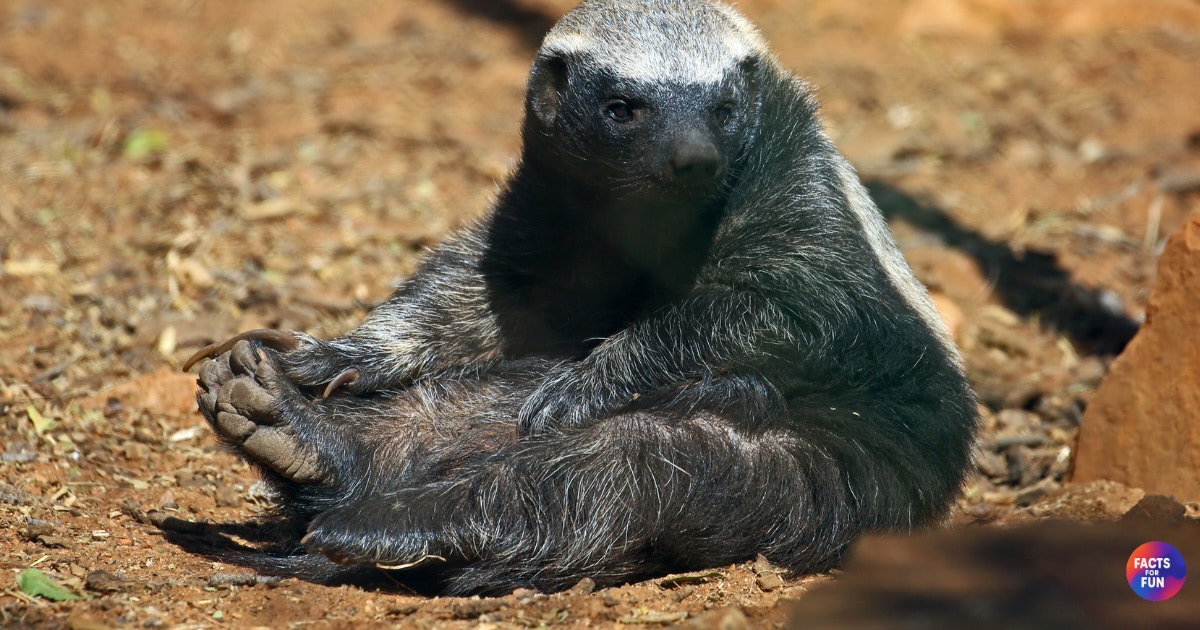
The honey badger, also known as the ratel, has a legendary reputation for being fearless. If you want a complete overview of this remarkable animal, check out our main guide: Fascinating Facts About the Honey Badger – Nature’s Toughest Animal. But behind that tough image is an animal with surprising intelligence and complex behavior. Let’s explore some fascinating facts about how honey badgers think, learn, and survive in the wild.
- Honey Badgers Use Tools to Solve Problems
- Honey Badgers Can Open Doors and Locks
- Honey Badgers Use Tools to Get Food in the Wild
- Honey Badgers Communicate With Scent Marks
- Honey Badger Cubs Learn for Over a Year
- Honey Badgers Are Bold but Also Strategic
- Honey Badgers Remember Solutions to Past Problems
- Honey Badgers Combine Strength With Brainpower
- FAQ
Honey Badgers Use Tools to Solve Problems
Honey badgers are known for using objects as tools to escape or reach their goals. In captivity, individuals have been observed stacking logs, rocks, and even moving dirt piles to climb over walls. They can push objects into position and adjust them until they form a usable ladder. This kind of problem solving shows planning and flexibility, traits linked to high intelligence in animals.
Honey Badgers Can Open Doors and Locks
These animals are famous escape artists. Honey badgers have been seen opening doors, sliding bolts, and manipulating simple locks with their paws and teeth. Some even work persistently until they find the right movement to free themselves. This behavior suggests strong memory, learning ability, and a drive to explore beyond barriers.
Honey Badgers Use Tools to Get Food in the Wild
In nature, honey badgers do not rely only on strength. They have been observed using sticks or stones to break into termite mounds, dig out prey, or smash hard shells. Using tools to access food is rare among mammals and highlights their creativity when facing tough challenges.
Honey Badgers Communicate With Scent Marks
Although mostly solitary, honey badgers have a complex way of communicating using scent. They mark territories with strong-smelling secretions to send messages to others about presence and dominance. Females use these scent signals to avoid direct conflicts, while males rely on them to maintain social boundaries. This invisible network helps them share space without constant fights.
Honey Badger Cubs Learn for Over a Year
Young honey badgers stay with their mothers for up to 16 months, which is a long time for animals of their size. During this period, cubs learn how to hunt, dig, climb, and deal with dangerous prey like snakes. This extended learning phase shows that honey badgers pass on complex survival skills that require practice and experience.
Honey Badgers Are Bold but Also Strategic
While they are famous for fearlessness, honey badgers do not act blindly. They assess threats, choose when to fight or retreat, and often use surprise to their advantage. Their bold behavior is paired with smart decision making, helping them survive encounters with much larger animals.
Honey Badgers Remember Solutions to Past Problems
Once a honey badger figures out how to overcome an obstacle, it can remember and repeat the solution later. This ability to learn from experience allows them to improve their chances each time they face similar challenges, whether escaping an enclosure or reaching hidden food.
Honey Badgers Combine Strength With Brainpower
What makes honey badgers truly special is the mix of raw power and sharp thinking. They dig fast, bite hard, and endure pain, but they also analyze their environment and adapt. Their unique body structure supports this lifestyle, and you can explore these traits in more detail in our article Incredible Facts About Honey Badger Anatomy. This balance of strength and intelligence makes them one of the most resourceful mammals in the wild.
FAQ
Why are honey badgers considered so intelligent?
Honey badgers show intelligence through problem solving, tool use, memory, and learning from experience. They can open locks, stack objects, and adjust their actions when something does not work. These skills indicate flexible thinking rather than simple instinct.
Do honey badgers really use tools in nature?
Yes, honey badgers have been observed using sticks, stones, and other objects in the wild to access food or break into tough structures like termite mounds. While not as common as in primates, this behavior is rare among mammals and highlights their creativity.
Are honey badgers social animals?
Honey badgers are mostly solitary, but they still have complex social behavior. They communicate using scent marks to avoid conflicts and define territories. Mothers also form long-term bonds with their cubs during the learning period.
What makes honey badgers so fearless?
Their fearlessness comes from a mix of tough skin, strong jaws, resistance to venom, and confidence built through experience. However, they are not reckless. They often choose smart strategies and know when persistence will pay off.
Sources
Wikipedia – Honey badger (Mellivora capensis)
Active Wild – Honey Badger Facts
Honey badgers: Adorable but fierce little mammals