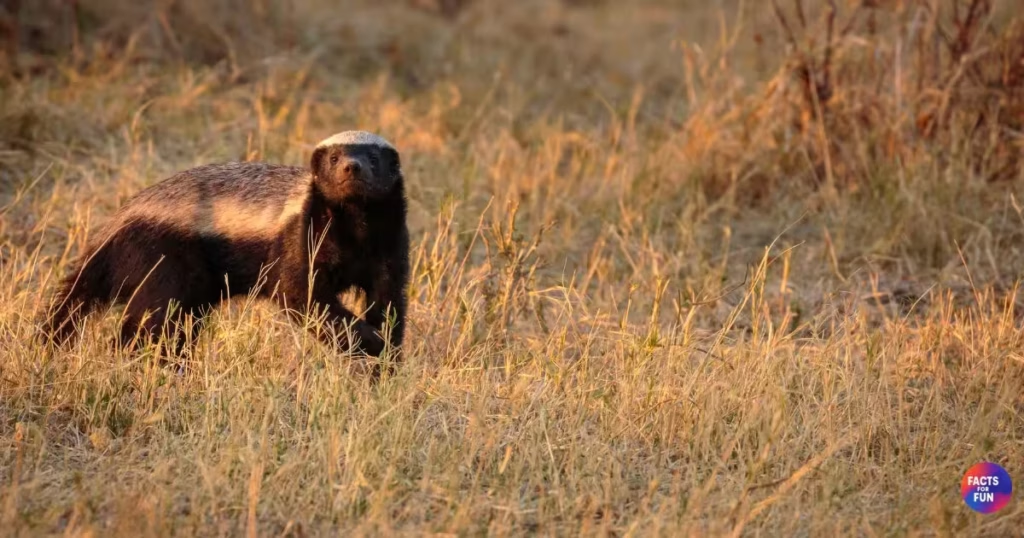
The honey badger is one of the most unusual mammals in the animal kingdom. Famous for its fearlessness, intelligence, and resilience, this small predator combines unique anatomy with highly adaptive behavior. Understanding how honey badgers survive helps explain why they can confront animals much larger than themselves and thrive in harsh environments.
This guide explores the honey badger’s evolution, subspecies, anatomy, intelligence, and survival strategies, with links to more detailed topic-specific articles.
Table of contents:
- The honey badger is the only living species of its kind
- There are multiple subspecies across Africa and Asia
- They inhabit two continents and thrive in almost any landscape
- Their skin is armor — thick, flexible, and nearly bite-proof
- Immune to venom and fearless against snakes
- Masters of adaptation — they eat almost anything
- Exceptionally intelligent and capable of using tools
- Aggression as defense — and offense
- Even cheetah cubs copy their look for protection
- Solitary and self-sufficient life
- A true symbol of toughness and survival
- Honey Badger FAQ: What People Want to Know
The honey badger is the only living species of its kind
There’s only one living species of honey badger in the world: Mellivora capensis. It’s the sole surviving member of both its genus (Mellivora) and subfamily (Mellivorinae). Though it resembles the European badger in shape and coloration, it’s actually more closely related to the wolverine. Fossil evidence shows that honey badgers have ancient roots — their extinct relatives, such as Mellivora benfieldi, lived more than 7 million years ago during the Late Miocene. Modern honey badgers likely appeared in Asia during the Pliocene and later spread across Africa.
This evolutionary isolation explains why the honey badger developed such a unique combination of anatomy and behavior not seen in other mustelids.
There are multiple subspecies across Africa and Asia
While there’s only one honey badger species, it includes at least 12 recognized subspecies spread across Africa, the Middle East, and parts of South and Central Asia. These subspecies differ mainly in body size and the amount of white or gray on their backs. The Cape ratel (M. c. capensis) lives in southern Africa and is medium-sized with a clear white “mantle.” The Indian ratel (M. c. indica) is smaller and paler, found across Iran, Pakistan, and northern India. The Nepalese ratel (M. c. inaurita) has a longer, denser coat for cooler climates, while the White-backed ratel (M. c. leuconota) in West Africa is almost entirely pale on top. A rare Black ratel (M. c. cottoni), nearly all black, occurs in Ghana and Congo. Despite these differences, all subspecies share the same courage, strength, and cunning that define the species.
These regional differences reflect local climate pressures, prey availability, and terrain rather than fundamental changes in behavior.
They inhabit two continents and thrive in almost any landscape
Honey badgers live across most of sub-Saharan Africa and extend into Southwest and Central Asia, including Iran, Iraq, Saudi Arabia, Turkmenistan, and India. They adapt easily to deserts, savannas, forests, mountains, and even coastal scrublands. They have been observed at elevations ranging from sea level to 13,000 feet (4,000 meters) in Ethiopia’s Bale Mountains. Agile diggers, they can excavate a den in under 10 minutes, creating tunnels 3–10 feet long and up to 5 feet deep. When convenient, they reuse abandoned burrows of aardvarks, warthogs, or foxes. Honey badgers rarely sleep in the same den two nights in a row — they’re nomadic hunters, always on the move.
This wide habitat range is possible because honey badgers combine physical endurance with behavioral flexibility and spatial memory.
Their skin is armor — thick, flexible, and nearly bite-proof
One of the most remarkable features of the honey badger is its exceptionally thick and loose skin, about ¼ inch (6 mm) thick. It works like a flexible armor suit, protecting the animal from snake bites, porcupine quills, and bee stings. The skin is so loose that even when grabbed by a predator, the badger can twist around and bite back. This natural defense, combined with dense muscles and strong bones, makes it almost impossible for larger predators — even lions or hyenas — to kill an adult honey badger quickly.
Over time, natural selection favored individuals whose skin reduced injury risk, allowing them to survive encounters that would kill other mammals.
👉 For a deeper look at its physical structure and unique survival adaptations, check out our detailed article Incredible Facts About Honey Badger Anatomy.
Immune to venom and fearless against snakes
Honey badgers are highly resistant to venom from some of the deadliest snakes in Africa, including cobras, puff adders, and black mambas. Documented cases show that after being bitten, the badger may collapse briefly, only to recover a few hours later — and then proceed to eat the snake. This resistance isn’t total immunity, but rather an extraordinary physiological tolerance developed through evolution. They also seem unaffected by scorpion stings that could easily kill smaller mammals.
This resistance is linked to changes in nerve receptors that reduce the impact of neurotoxins on the nervous system.
Masters of adaptation — they eat almost anything
Honey badgers are opportunistic omnivores. Their diet ranges from snakes, rodents, and birds to frogs, eggs, insects, fruit, and roots. They’re known to consume everything — bones, skin, feathers, even the shells of tortoises. Their name comes from their fondness for raiding beehives to eat honey, bee larvae, and wax. Their thick skin and resistance to stings make them nearly immune to bee attacks. In some regions, they’ve even been observed cooperating with honeyguide birds, which lead them to wild hives in exchange for leftover wax and larvae.
Dietary flexibility allows honey badgers to survive seasonal shortages that cause population declines in more specialized predators.
Exceptionally intelligent and capable of using tools
Intelligence plays a central role in the honey badger’s survival strategy. Honey badgers rank among the most intelligent small mammals. In captivity, they’ve been filmed using sticks, stones, and even rakes to escape enclosures or access food. Wild individuals are known to roll heavy logs or stones to reach prey or break ostrich eggs. This advanced problem-solving ability, combined with memory and determination, makes them formidable survivors. To explore this side of the honey badger in more detail, read our article Facts About Honey Badger Behavior and Intelligence.
Aggression as defense — and offense
When cornered, honey badgers turn into relentless fighters. They growl, hiss, puff up their fur, and release a foul-smelling secretion from their anal glands to deter attackers. If provoked further, they attack head-on, targeting sensitive areas — even the eyes or genitals — of much larger animals. Their jaw muscles are so strong that they can crush small bones and even crack open turtle shells. Because of these traits, they’re one of the few animals that can chase off predators like leopards or hyenas.
In many cases, aggressive displays alone are enough to deter predators without physical conflict.
Even cheetah cubs copy their look for protection
In a remarkable case of mimicry in nature, young cheetah cubs resemble honey badgers during their first few months of life. Their long grayish mantles and dark undersides make them look strikingly similar to the fearless predator. This resemblance likely evolved as a protective adaptation, as predators familiar with the honey badger’s aggressive behavior tend to avoid attacking anything that carries similar visual cues. A deeper explanation of how this mimicry may reduce predation risk is explored in our article Why Do Cheetah Cubs Look Like Honey Badgers?.
As the cubs grow, their coat changes and the resemblance fades, marking a shift from visual deterrence to speed and agility as their primary survival strategy. This is one of the clearest examples of protective mimicry among large mammals.

Solitary and self-sufficient life
Honey badgers are primarily solitary and territorial. Males and females come together only to mate, and each maintains a wide home range. They travel several miles nightly in search of food. A typical litter consists of one or two cubs, born hairless and blind. The mother raises them alone for up to 16 months, teaching hunting skills before they become independent.
A true symbol of toughness and survival
The honey badger’s success lies not in size or speed, but in a rare balance of anatomy, intelligence, and behavioral boldness. From venom resistance to tool use, it’s a rare blend of physical strength and intelligence. Though small (usually under 35 pounds), it fears no one, and that attitude has made it an icon of courage across Africa and beyond.
Honey Badger FAQ: What People Want to Know
Why is the honey badger considered one of the toughest animals in the world?
Honey badgers combine thick, loose skin, powerful jaws, and fearless behavior. Their skin protects them from bites and stings and lets them twist free if grabbed. They also fight back aggressively, even against much larger predators, which has earned them a legendary reputation for toughness.
Are honey badgers really immune to snake venom?
Honey badgers are not fully immune, but they have an exceptional resistance to venom from snakes like cobras and puff adders. After being bitten, they may collapse for a short time, then recover and continue hunting. This high tolerance makes them one of the few mammals able to prey on dangerous snakes.
Do honey badgers actually eat honey?
Yes. Honey badgers raid beehives to eat honey, larvae, and wax. Their thick skin helps protect them from stings, and their strong claws allow them to rip open nests. In some regions, they even follow honeyguide birds that lead them to wild hives.
How intelligent are honey badgers?
Honey badgers are among the most intelligent small mammals. They can solve problems, remember solutions, and persist until they succeed. In captivity, they have been observed stacking objects and opening barriers, while in the wild they show clever hunting and foraging strategies.
Where do honey badgers live, and what habitats do they prefer?
Honey badgers live across much of Africa and parts of Southwest and South Asia. They adapt easily to deserts, savannas, forests, scrublands, and mountain regions. Their ability to dig shelters quickly and travel long distances helps them survive in many environments.
Do honey badgers live in groups or alone?
Honey badgers are mostly solitary. Adults hunt and travel alone and usually meet others only to mate. Mothers raise their cubs by themselves, teaching them essential survival skills for many months before the young become independent.
Why do cheetah cubs look like honey badgers when they are young?
Young cheetah cubs have a shaggy, pale mantle that makes them resemble honey badgers. This may help protect them because predators often avoid honey badgers due to their aggressive nature. As cheetahs grow older, this resemblance gradually fades.
Sources and References:
This article is based on academic publications, field studies, and reputable wildlife research sources listed below.
Begg, C. & Begg, K. (2013). The Secret Life of the Honey Badger. Wildlife Conservation Research Unit.
Kingdon, J. (2015). The Kingdon Field Guide to African Mammals. Princeton University Press.
Roberts, T. (2005). The Mammals of Pakistan. Oxford University Press.
Guinness World Records (2016). Most Fearless Animal: Honey Badger.
Animal Diversity Web, University of Michigan Museum of Zoology.